“You’re working on someone else’s dream. And that is perfectly fine. It is their vision.”
Still frame from indie short 'Daddy Issues'
Lorenz Hideyoshi Ruwwe’s arc runs across two decades and, by every indication, is still going: childhood curiosity, years of independent filmmaking, martial arts training, a self-built community of collaborators, professional work, Dune, more independent filmmaking, Night Shift, and more to come. Dune isn’t the hinge this story turns on. It’s one stop, an important one, inside a longer and steadier practice that started before it and never stopped after it.
Preparation, Then Opportunity
Lorenz has a phrase he likes: luck is when preparation meets opportunity. It’s worth taking seriously as the actual thesis of his early years, because the more common version of this kind of story — the sudden break — undersells what came before it by roughly two decades.
As kids, Lorenz and his brother Felix sold hand-drawn art door to door and asked for donations until they’d earned enough to buy their first camcorders and a faster computer. Once they had a camera, choreography got worked out on paper first — stick figures sketched before filming, because videotape was too expensive to waste on rehearsal. They trained in Taekwondo for seven years, then Shaolin Kung Fu under a monk who’d come over from China, for five more. And they studied Hong Kong action cinema closely — Jackie Chan, Sammo Hung — which is where they first learned how a fight actually gets built for camera. They taught themselves editing. They found an online community of amateur filmmakers before social media existed to make that easy, and that community became collaborators, then colleagues, then the connections that eventually led to real work: professional credits across a growing circle of collaborators.
None of that reads as luck. It reads as twenty years of preparation, quietly waiting for an opportunity large enough to deserve it.
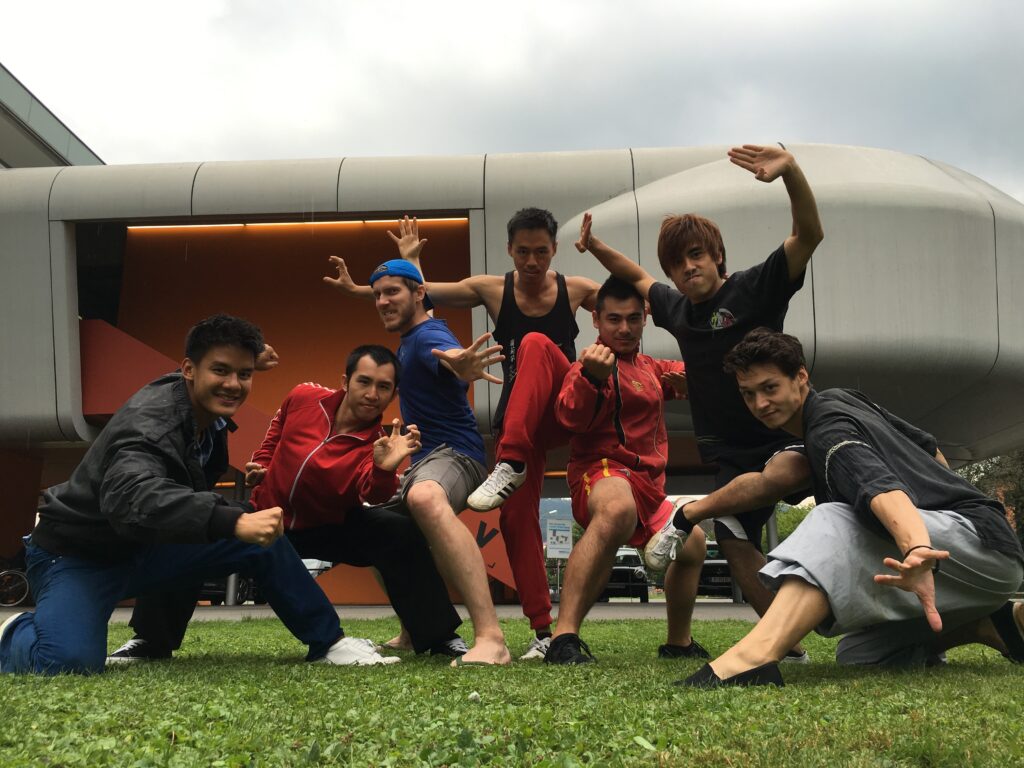
Team photo for indie short 'Pokemon Go Crazy' while also working on a theatre job at the Bregenzer Festspiele
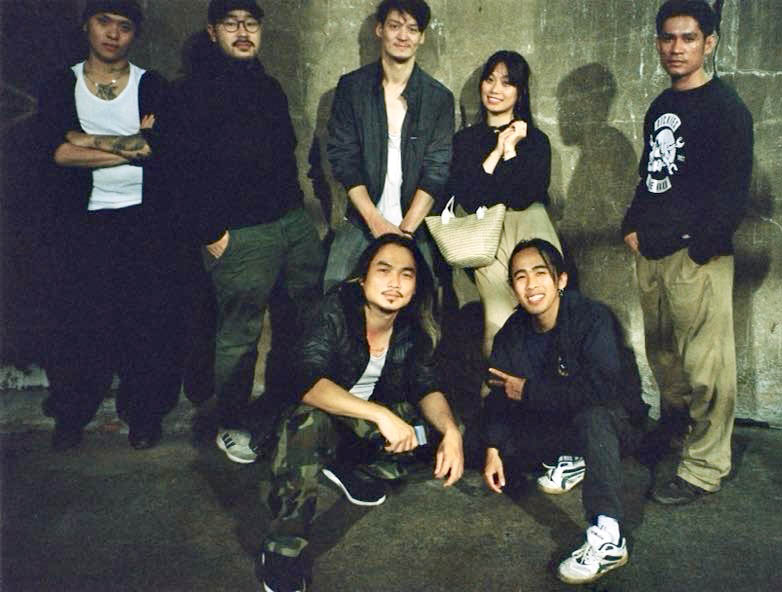
Upon wrapping the group fight shoot for Night Shift
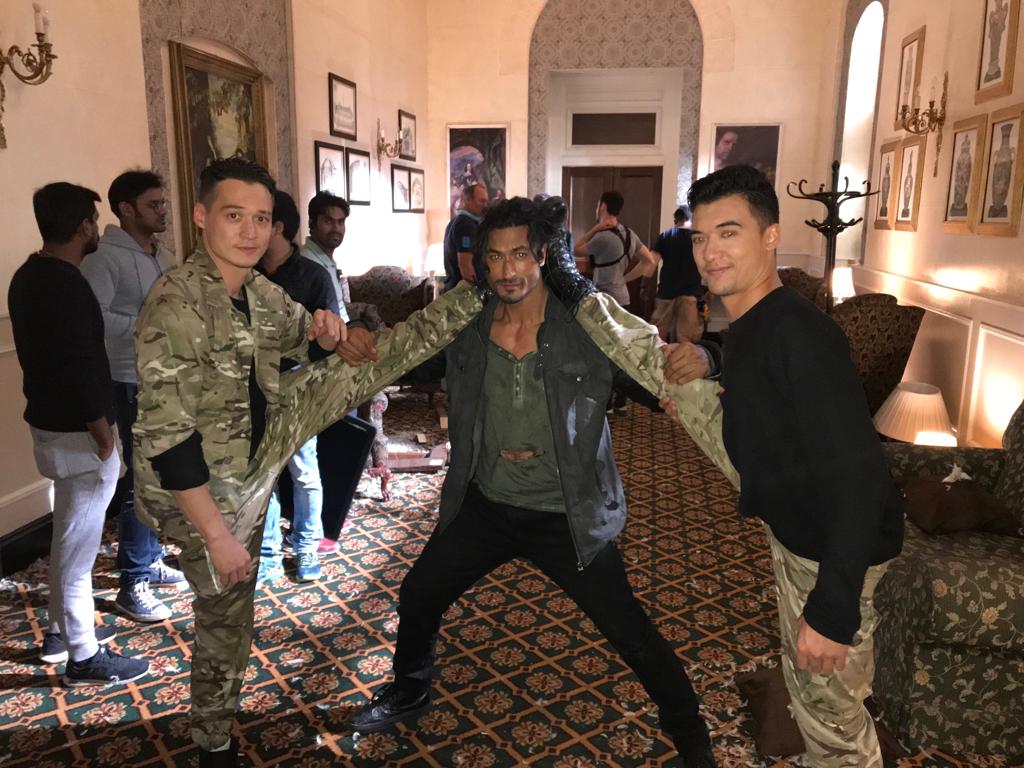
Lorenz with his brother Felix and Vidyut Jamwal, while working on Commando 3
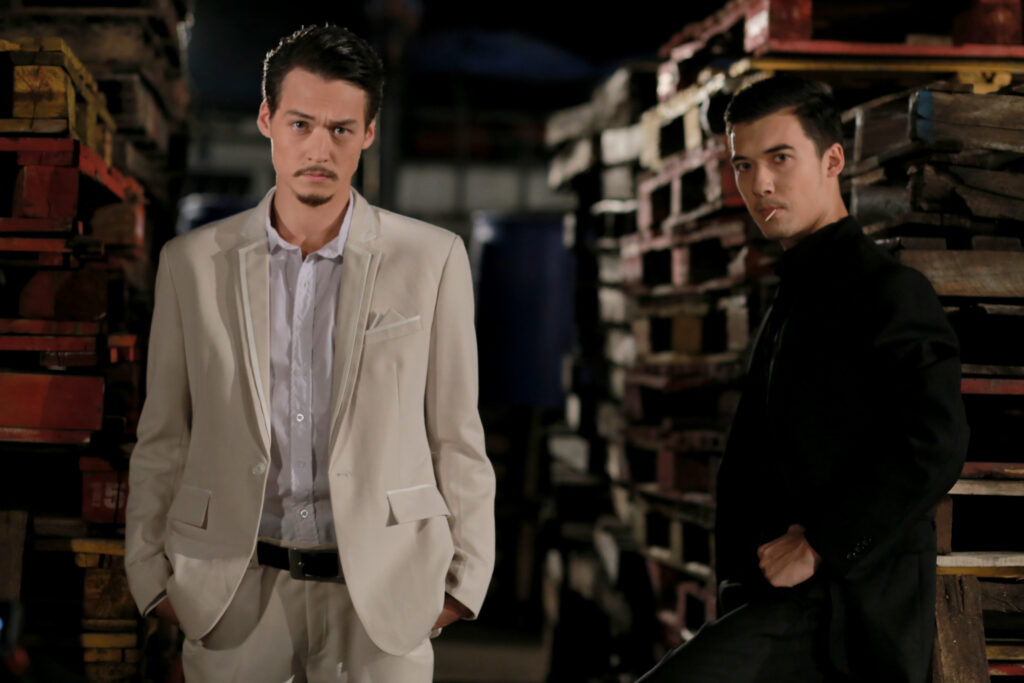
Another bad guy duo team up with his brother, for viet action film Luc Van Tien
What Dune Actually Demonstrated
That opportunity was Dune — all three films, start to finish, as Paul Atreides’ stunt double. It is worth being precise about what that represents, because it is not a story about a newcomer suddenly thrown into the deep end. Lorenz had doubled before. He knew the rhythms of a professional set. What changed on Dune was scope, not readiness.
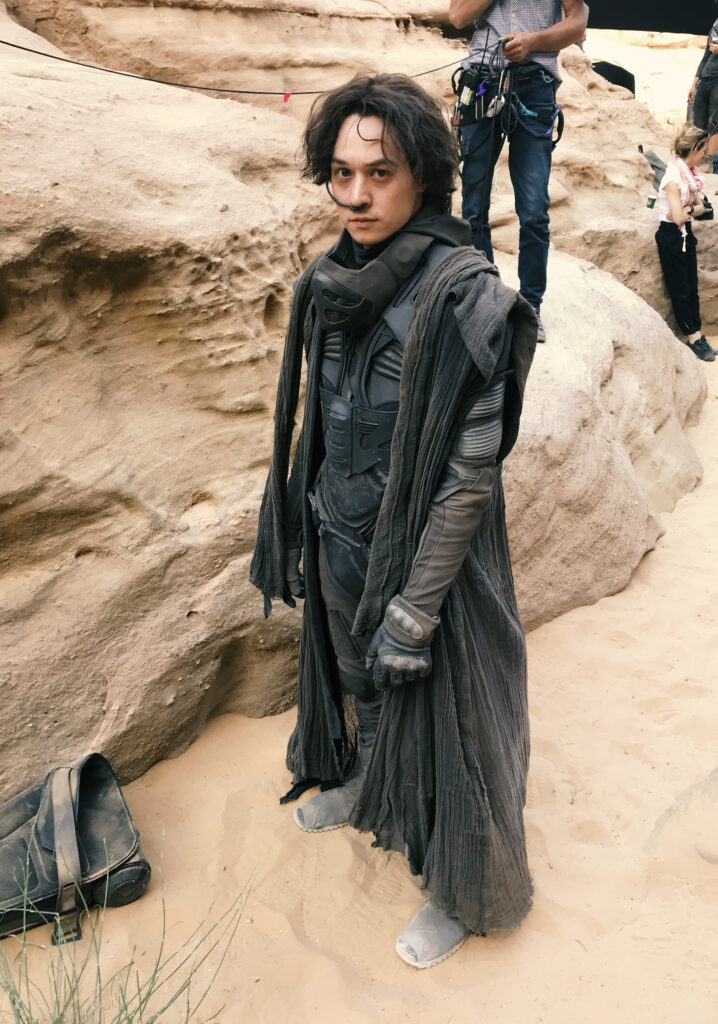
Lorenz stunt doubling for Paul Atreides, Dune Part 1
Even so, he tells it with the same instinct for immersion that defined his childhood: landing at the airport, driven straight to the studio, handed swords before he’d unpacked, and learning finished choreography on the spot because that’s simply what the job required that day. It’s the same person who once drew fight scenes on paper because there was no other way to remember them — just now inside a production large enough to need a small army of specialists to make anything happen at all.
That’s the real subject of this section: what contribution looks like at the highest level a discipline allows. Lorenz’s own description of the arrangement is the clearest way to say it. “You’re working on someone else’s dream,” he says. “And that is perfectly fine. It is their vision. I help with the skills that I can bring to the table.” It’s a plainspoken, accurate description of what a production the size of Dune requires: a hierarchy, a clear division of responsibility, and contributors who do the job they were hired to do — no more, no less — while a single overarching vision holds the whole thing together.
The Machinery of a Big Production
The technical differences between Hollywood and Hong Kong action filmmaking are best understood as two different traditions, not a comparison of which one gets it right.
The honest version is this: Western productions typically choreograph a fight in full, then capture it in long master shots from a range of angles, coverage-style, and assemble the final sequence afterward in the edit. Hong Kong productions in the Jackie Chan and Sammo Hung tradition tend to work the opposite way — the fight is largely preassembled in the choreographer’s mind before a single frame is shot, and the camera captures only what each beat specifically needs, in order, with nothing left to guesswork. Each approach comes out of a different history and a different set of priorities, and each has something to teach the other.
On the Dune films specifically, Lorenz is clear that the camera department wasn’t absent from the process — they reviewed previz, they watched the choreography performed live before shooting. The more accurate way to describe it is a matter of specialized knowledge rather than involvement: a cinematographer chosen for command of mood and visual language, which is exactly what a film like Dune needs, is not necessarily equipped to read martial arts technique the way a Hong Kong-trained camera operator would be. It’s a reasonable trade-off for the kind of film Dune is.
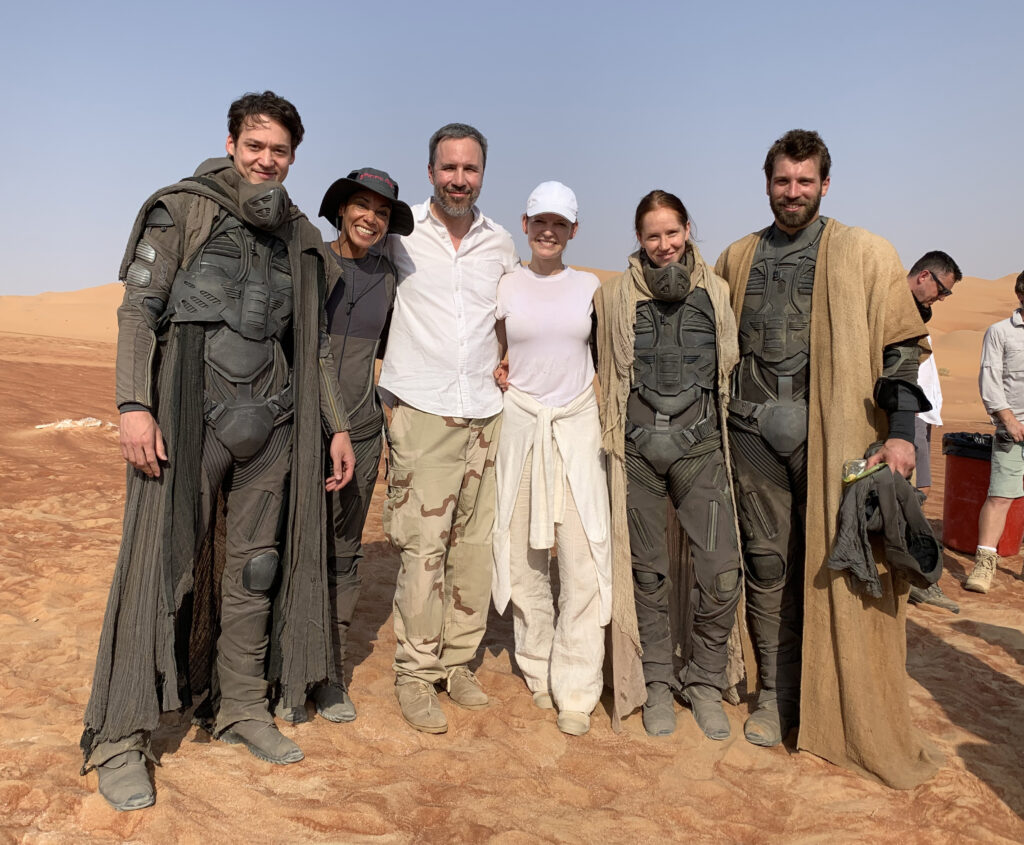
Lorenz with director Denis Villeneuve, Tania Lapointe and stunt colleagues upon wrap in the UAE, Dune Part 1
As Lorenz points out, Denis Villeneuve was explicit that these are science-fiction epics first, not martial arts films, and that the action existed in service of that larger vision — a vision Lorenz says he genuinely admired Villeneuve for holding onto, even in the moments where finer choreographic detail didn’t fully survive translation to screen. The action team could offer suggestions. The call, appropriately, belonged to the director.
There was, by Lorenz’s account, exactly one isolated moment during the Dune: Part Two finale where performers were asked to slow down to accommodate the camera — a small, specific instance, not a pattern. If anything, he considers Part Two a marked improvement over Part One in how the fights were ultimately shot and cut. The broader point is a clear-eyed account of how expertise gets allocated across a large production, and why that allocation makes sense even when it means the action department’s specific priorities aren’t always the ones that win.
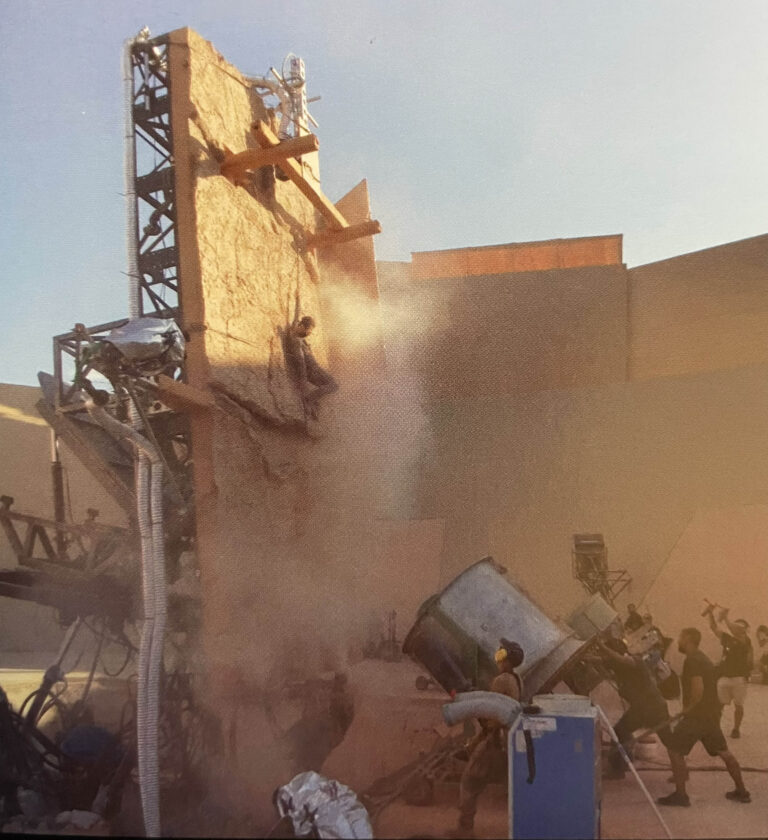
Worm unit for Dune Part 2 - As seen in The Art and Soul of Dune Part 2, by Tanya Lapointe
Continued Independent Filmmaking
None of this stopped Lorenz from making his own films, because he never started making them because of Dune, and he never stopped because of it either.
Long before any studio credit, he was already making short films the way he’d learned to with his brother and friends — studying Hong Kong cinema, training in martial arts, practicing the filmmaking craft itself — with full creative control over every part of the process. That practice didn’t pause for Dune and didn’t resume after it. It simply continued, the way it always had, whenever there was time and a reason to point a camera at something.
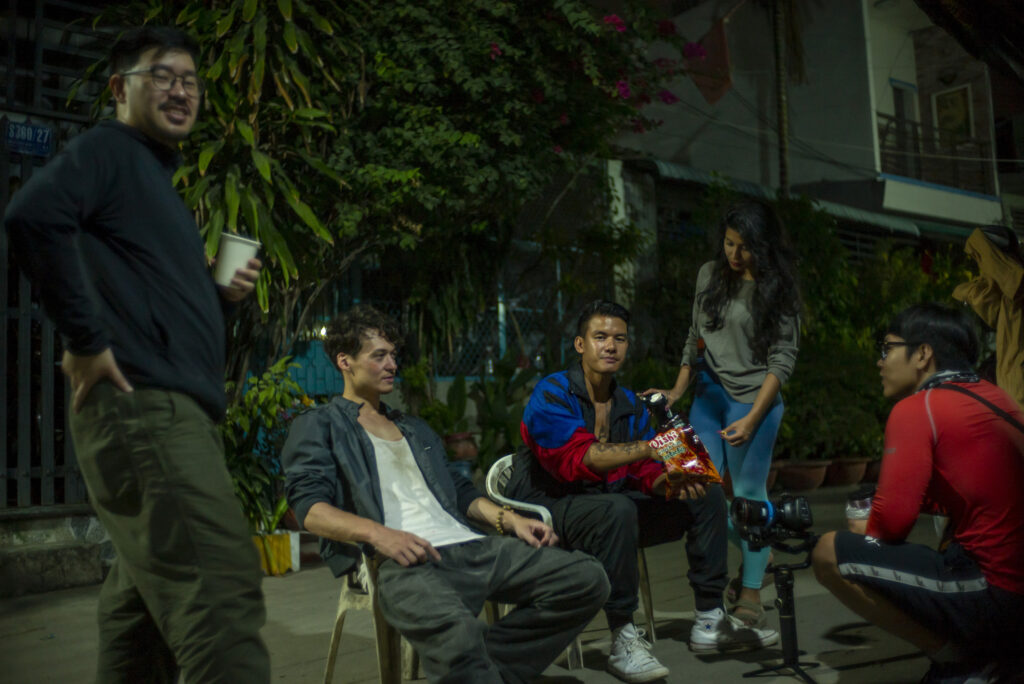
On the set of Night Shift
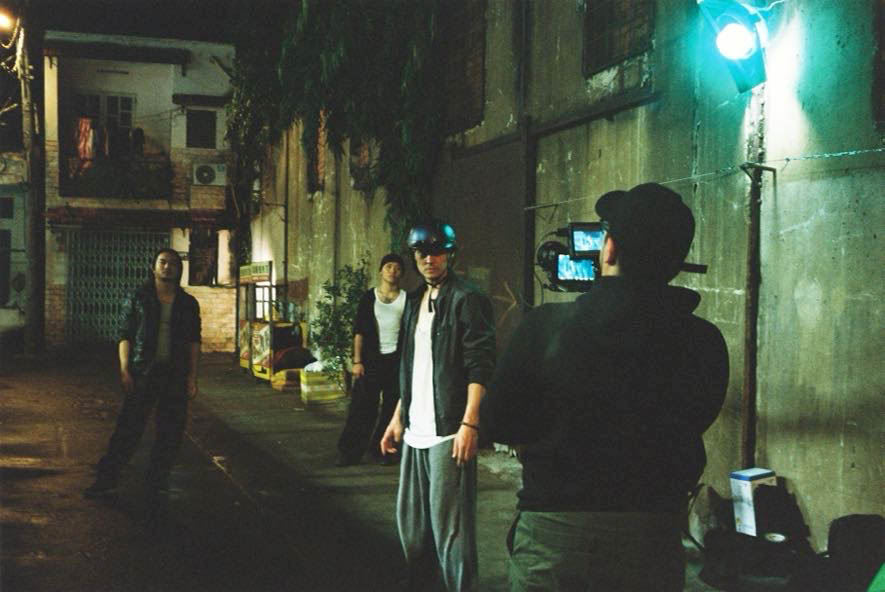
BTS Filming Night Shift
Night Shift, his most recent short, is one example of that ongoing practice, not a reaction to the years before it. The story behind it is almost defiantly small: a friend’s wedding in Vietnam, an offhand suggestion that Saigon would be a great place to shoot something, a script written on his phone in about an hour. He scouted locations himself, driving through the city at night. He borrowed scooters. He called friends instead of crewing agencies. It took two more trips back to Vietnam over two years to finish it — not because something had gone wrong the first time, but because that’s simply how long it takes to make something right when every decision runs through one person.
What that practice has always guaranteed — on Night Shift and on every short before it — is something a production the size of Dune structurally cannot: camera, choreography, and edit answering to a single point of view, start to finish. “Editing is also part of action design,” Lorenz says, “and on a big production, you have no say at all.” On his own films, he has every say. It’s a separate discipline, exercised in whatever time is left over. As he puts it, “the only thing you can do is use your own time to be creative and productive and show what you can do in the meantime.” That’s a description of what he’s been doing, consistently, for most of his life.
Two Kinds of Creative Responsibility
Lorenz talks about both kinds of work with the same evenness, describing each as its own form of creative responsibility rather than placing one above the other.
Large productions taught him discipline, hierarchy, and how to serve someone else’s vision at the highest level his skill allows — a genuinely difficult thing to do well, and not a lesser use of talent for being in service of another filmmaker’s dream. His own films ask a different question entirely: what happens when every decision belongs to you, when there’s no hierarchy to navigate and no one else’s vision to serve but your own. Together, the two describe the complete working life of a filmmaker who has never stopped doing both at once.
Some dreams you help build. Some you build yourself.