
' ' '
Atlantis Artist Spotlight
"Sometimes You Save Time by Slowing Down"
Before speaking with Jeremy Fry, I had the opportunity to talk with several people who have worked alongside him for years—Ernie Vigil, Danny Downey, and Jef Groff. Although none of them knew what the others had said, one theme kept surfacing.
Danny shared a story that immediately stuck with me.
Years ago, the two worked together at Rick Seaman’s Motion Picture Driving Clinic. Part of the job was preparing the fleet of stunt cars before each class. Danny remembered Jeremy meticulously scrubbing the wheels on old Chevrolet Caprices—not because anyone asked him to, but simply because he cared enough to do the job properly.
Danny wasn’t really talking about clean wheels.
He was talking about character.
When I shared that story with Jeremy, he laughed. Cars, he explained, have always represented far more than transportation.
“Cars are so cool. Some people see them as appliances. To me they’re freedom. They’re a form of self-expression.”
But the attraction was never simply about driving.
“The challenge is what keeps me interested. You’re presented with a problem, you gather your team together, and everyone works to find a solution. There’s an incredible satisfaction in helping other people succeed.”
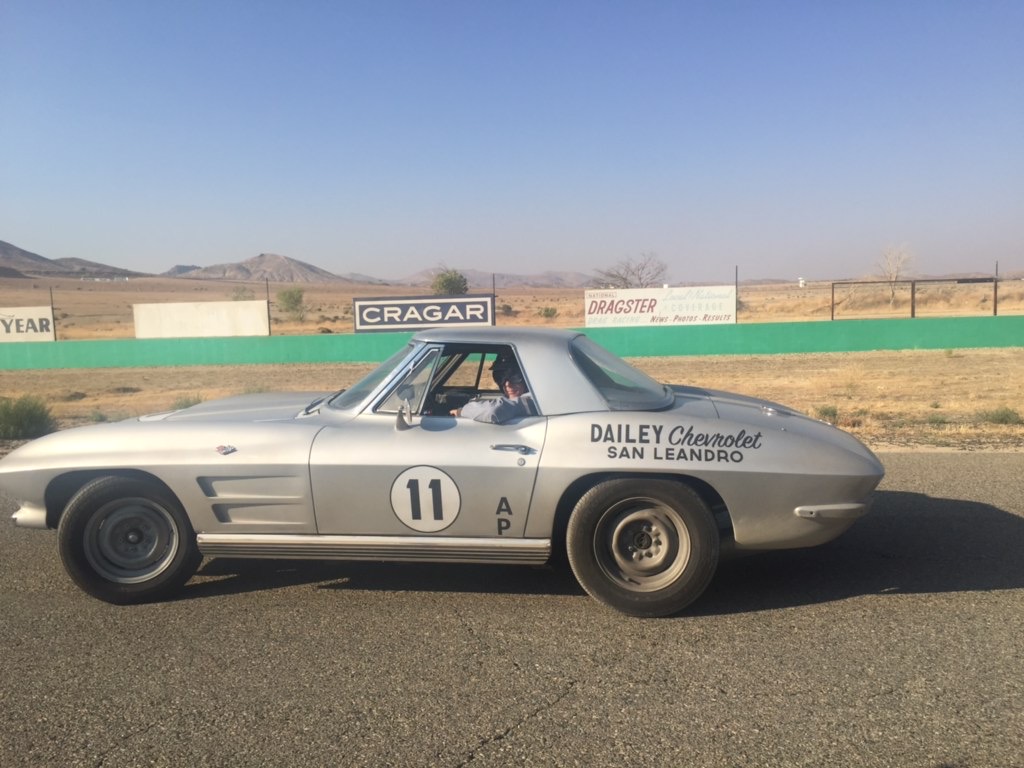
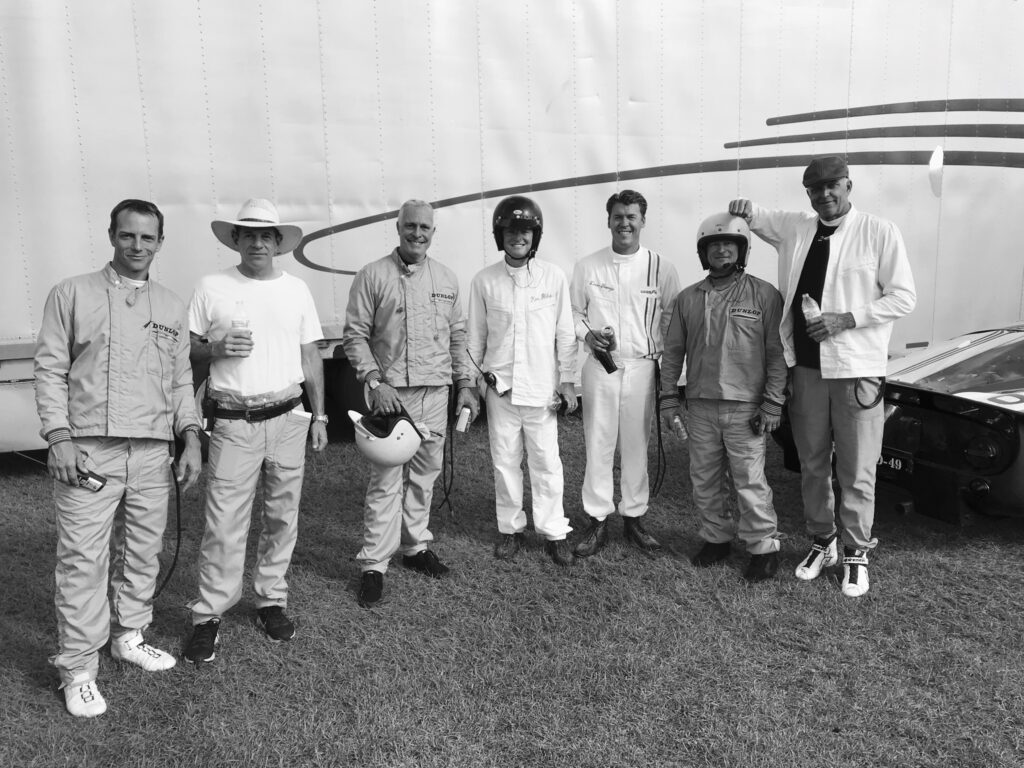
left to right: Jeremy Fry, Chris Palermo, Tony Hunt, Kelly Collins, Alex Gurney, John Capps, Rich Rutherford
Jeremy spent twelve years instructing at Rick Seaman’s driving school, helping develop countless stunt performers, and that desire to teach and benefit others has remained throughout his career. Now as a stunt coordinator, that role as a teacher continues and for someone responsible for coordinating some of the largest driving sequences in modern filmmaking, Jeremy’s philosophy of leadership is surprisingly simple:
Treat people the way you want to be treated.
“People don’t like yelling. It just puts people on edge. Honestly… if I’m yelling, I’m attracting attention. Trust me, if something goes wrong, I just want to crawl under a rock.”
Instead, he described a lesson that has stayed with him throughout his career:
"Sometimes you save time by slowing down."
Road closures are expensive. Crews are waiting. Police escorts, picture cars, cameras, performers, background traffic—everything is operating on the clock. It becomes tempting to rush. Jeremy believes that’s exactly when mistakes happen.
“If it takes ten minutes to lock up the road, execute the stunt, and reopen everything, but people weren’t really clear on what they were supposed to do then you’ve just cost yourself ten minutes to do it all again.
“Take three minutes. Explain the stunt. Make sure everyone understands. Then execute it once.”
That philosophy carries directly into trust. Throughout our conversations with stunt performers, one theme emerged again and again: preparation creates confidence. Jeremy agreed.
“I believe everyone is doing their best. If something doesn’t go right… okay. Fix it. Go back to one. Go again.”
There was only one thing he found difficult to excuse: not paying attention.
But trust, Jeremy explained, also requires humility. He’s made mistakes himself.
“I’ve been there. I’ve had things not go as planned, and I’ve learned from those experiences.”
That experience fundamentally shaped the way he now leads others. Rather than pushing performers beyond what they believe is safe, Jeremy encourages them to speak up.
“I wouldn’t ask anyone to do anything I wouldn’t—or haven’t—done myself.”
For Jeremy, safety isn’t built through fear. It’s built through engagement. Everyone paying attention. Everyone understanding the plan. Everyone feeling comfortable enough to speak if something doesn’t feel right.
Perhaps the most fascinating part of our conversation came when we stopped talking about driving and started talking about storytelling. Jeremy doesn’t believe action exists simply to create excitement.
“The action should move the story.”
He pointed to a moment from Crime 101 that ultimately never made the final cut. Originally, the motorcycle rider wasn’t supposed to perform wheelies because motorcycles are exciting; the wheelies were character. The rider was mocking the hero. Taunting him. Giving him the finger without saying a word.
Likewise, a planned drift in front of an approaching train wasn’t designed simply because it looked spectacular. It communicated confidence. Control. Disrespect. The train itself never materialized during production, and the moment changed. But Jeremy’s thinking never did.
"There is absolutely car acting."
How someone drives tells you who they are. Are they angry? Terrified? Trying to intimidate? Trying to kill someone? Those answers should be visible long before a line of dialogue explains them.
“I try to communicate all of that through the way the car moves.”
That same philosophy extends into every stage of designing a chase. Sometimes the screenplay contains detailed story beats; sometimes it simply says: “Car chase ensues.” Either way, Jeremy begins in the same place: conversation. Director. Producer. Story.
“I prefer being a storyteller. But I’m not the storyteller. I’m there to help.”
Even visual effects have become part of that collaboration. Rather than viewing VFX as competition, Jeremy sees it as another department helping tell the same story.
“What do we have to do practically? What’s optional? Everyone’s working together.”
Sometimes digital tools make sequences safer. Sometimes they remove limitations. The goal remains unchanged: serve the story.

When I asked who had shaped his career, Jeremy’s answer came quickly: Darrin Prescott.
“He’s had the biggest impact on where I’m at today.”
Rick Seaman gave him the opportunity to begin. Scott Rogers gave him his first glimpse into the profession. And then there are the collaborators—the people whose names audiences rarely know. Danny Downey. Jalil Lynch. Drivers capable not only of extraordinary precision but of elevating every sequence with ideas of their own.
“Jay always brings amazing things to the table.”
Trust, after all, goes both directions. Danny had described never feeling alone when Jeremy put him in the driver’s seat. Jeremy smiled when I mentioned it.
“Every relationship is built on trust.”
Whether it’s marriage, business, or stunt work. Without trust… there isn’t much of a relationship.
Near the end of our conversation, I asked Jeremy who deserved more recognition.
He paused for a moment before answering.
“Honestly,” he said, “there are a lot of people in this business who don’t really want recognition. They’re just here because they love what they do.”
Jeremy admitted that he counts himself among them. The spotlight has never been something he’s particularly comfortable standing in.
But after thinking for another moment, his mind settled somewhere audiences rarely think to look.
The camera cars.
The focus pullers.
The production assistants holding lockups.
The countless people performing invisible work that quietly allows everyone else to succeed.
It was exactly the sort of answer I’d come to expect throughout this initiative. The people closest to the work almost always use the opportunity to shine the spotlight on someone else.
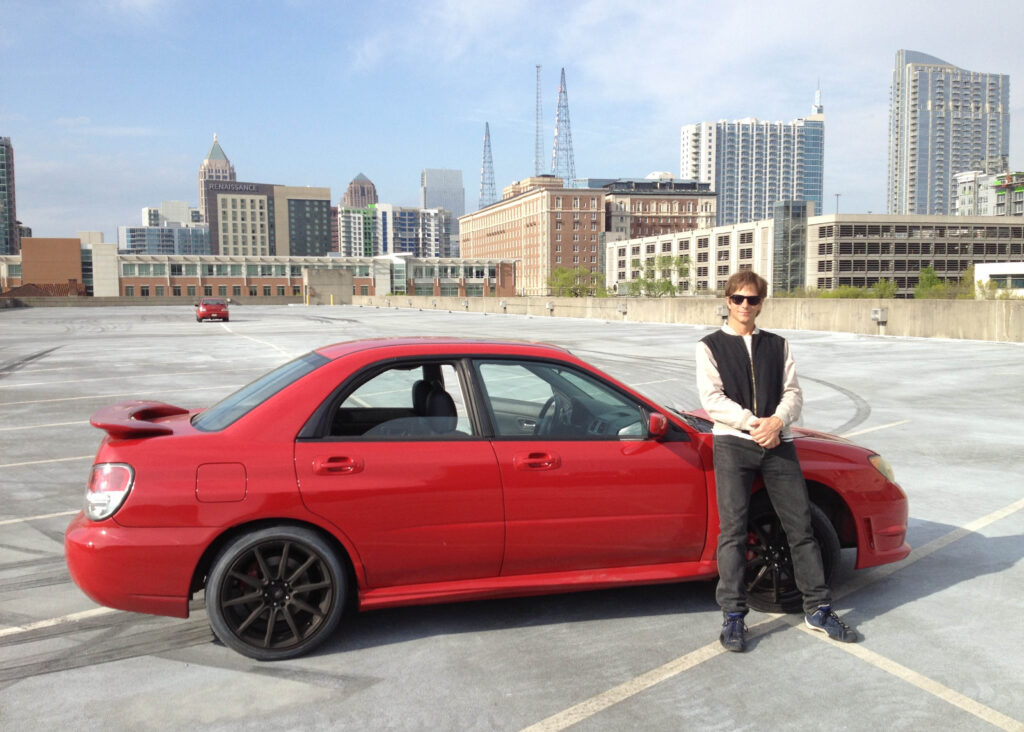
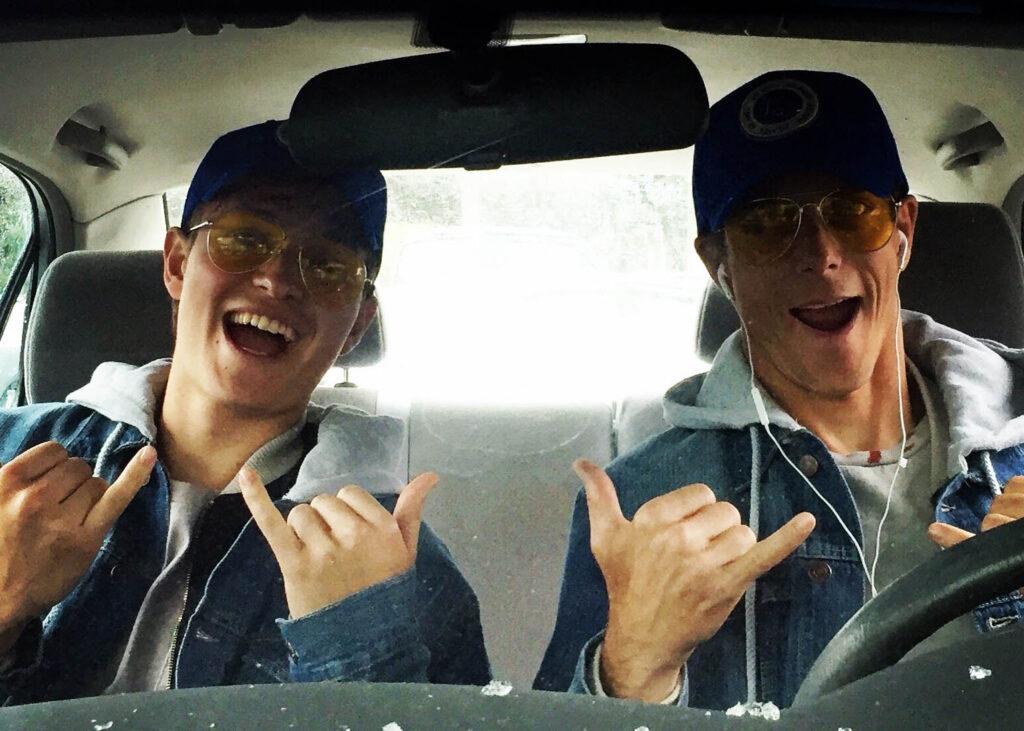
Finally, I asked Jeremy two questions: What was he most proud of? And what did he hope the next generation never lost?
The first answer was classic Jeremy. Humble, a little self-deprecating, but very earnest.
“Honestly… I’m an incredibly slow learner and not that talented.”
He smiled.
“I think I fooled enough people to make up for my lack of talent with raw passion and effort. I couldn’t fall back on talent. It was absolute passion, and I worked very hard for it.”
The second answer lingered with me. At first he laughed.
“A job.”
Then he grew thoughtful.
“I hope people don’t lose the magic of what we do.”
He paused.
“I hope they appreciate what got us here. Even before me.”
Another pause.
"What we do is pretty cool."
Earlier in our conversation, Jeremy had told me that sometimes you save time by slowing down.
At the time, I thought he was talking about road closures.
By the end, I realized that philosophy wasn’t really about stunt coordination. It was about life.
Do the small things well. Take care of the people around you. Never lose the magic.
And maybe that’s why Danny remembered clean wheels.
Because in Jeremy Fry’s world, the smallest details have always mattered.