' ' '
Atlantis Artist Spotlight
Take the Swing
Written by Joshua Allen
Founder and Executive Director, The Atlantis Awards
“If we’re going wide, then go wide. If we’re going in, then go in.” — Liam Calvert
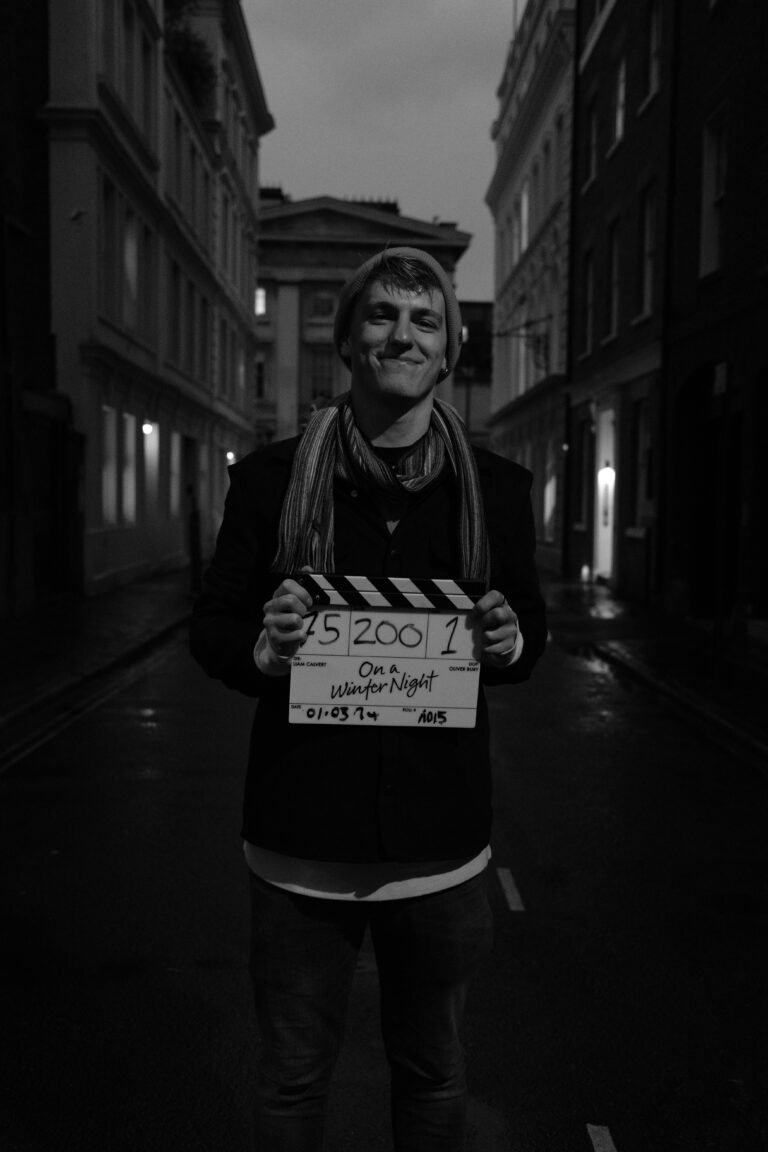
Based on a conversation with Liam Calvert on September 28, 2026. This Spotlight discusses the production and ending of A Night Like This and accompanies the independent Atlantis Case Study, Liminal Until Eight.
Quotations have been lightly edited for clarity and length.
During post-production on his first feature, Liam Calvert found himself at a networking event introducing himself as a director who had made a few short films. The friend beside him had to nudge him: and your feature film. “And I’m like, oh yeah,” he says. He had done the work. Putting it into the sentence he used to describe himself took a little longer.
That feature was A Night Like This, written and produced by Diego Scerrati, with Jack Brett Anderson and Alexander Lincoln as two troubled strangers whose encounter becomes a night-long passage through London. Its festival run and cinema release gave Calvert opportunities, confidence and an introduction to a wider professional world. They did not produce the uninterrupted ringing telephone some hopeful part of him had imagined. “Part of me thought, oh, I’ve made a film, the phone’s gonna be ringing off the hook,” he says, recalling his own optimism with amusement.
His account of making it is full of decisions that remain interesting because he doesn’t polish away their uncertainty. There is a missing camera angle, a postponed kiss, a useful sign nobody designed and another that somebody did. He talks readily about what he planned, what a collaborator contributed and what became valuable only after it had happened. Across those distinctions, a filmmaker comes into view: increasingly willing to make consequential choices, and equally interested in keeping the people around him able to change his mind.
The Safety of the Edit
Editing appealed to Calvert first through its logic. In sixth form and at university, he enjoyed piecing material together, solving problems and finding a shape in what had already been filmed. He still speaks about that work with affection. Looking back, though, he thinks part of its appeal was shelter.
“In the edit, you’ve got what you’ve got, and you just have to work with it,” he says. “When you’re the one on set saying, ‘Oh, no, we don’t need that — oh, yes, we need this,’ there’s a bit more pressure.” He remembers being nervous about “sticking my head out.” Working with existing footage let him contribute while staying a step removed from the responsibility for deciding what footage should exist.
Over time, the work made that distance harder to keep. Cutting other people’s projects, he caught himself thinking, I’d have done that differently, or this could have been like this. Toward the end of university, he wrote some material and tried directing it. The pleasure of having a say from the beginning arrived alongside a growing willingness to put himself forward.
Directing didn’t replace the editor in Liam Calvert. It made the editor show up earlier.
Reading a screenplay, he could ask how long a scene might actually feel, what information might be redundant and how one passage would lead into the next. Moving to a feature made those transitions a larger problem. A short might have five to ten scenes; a feature requires him to sustain movement across a far longer chain. “Having the editor brain helped a little bit with that,” he says. “I still found it a bit tricky.”

A Script, Then a Job
His relationship with Scerrati began with script feedback through Coverfly. One screenplay led to an invitation to read another, which became A Night Like This. They went on to exchange notes by email, and Calvert found the initial detachment useful. He could respond to the writing without thinking of it as something he would personally have to deliver. Only after they had been talking for a while did Scerrati mention that he was looking for a director.
As the possibility became a project, Calvert’s involvement grew into development work. He is careful about the difference between contributing to a screenplay and claiming to have remade it. “We changed some sequences. I suggested some bits,” he says, “but it was still kind of Diego’s script.”
The arrangement also had to absorb circumstances neither had planned for. Another producer was due to travel from Australia for the shoot but couldn’t come, leaving Scerrati to take on the on-set producing. “It wasn’t what we’d planned,” Calvert says, “but we made it work.” The screenplay remained Scerrati’s, while his responsibilities during production grew beyond what either man had expected.
Calvert’s account of the film’s central device has a similar attention to circumstances. Lukas and Oliver agree that their encounter will end at eight in the morning. Rather than letting that deadline govern every scene, he worked through what each man felt and wanted in the moment. Sometimes they could forget the deadline entirely. When they needed it again, it could reassure them or threaten them.
“One will get close, the other one will pull away, and vice versa,” he says, “and they’re both kind of using it to their own ends.” It can be a safety blanket — I can open up, because it’s only until the morning — and then, once someone begins wanting more, a threat. The actors needed something immediate to play even when the larger structure remained in the back of the director’s mind.
What We Need, What We Want
Calvert and cinematographer Oliver Bury brought considerable appetite to the shoot. We can fit that in. We can fit that in. Their first assistant director, Antonia Lange, supplied the limits, repeatedly separating what they could imagine from what the day could accommodate. Out of those discussions came a practical hierarchy: what they needed, what they wanted and what they would like if time allowed.
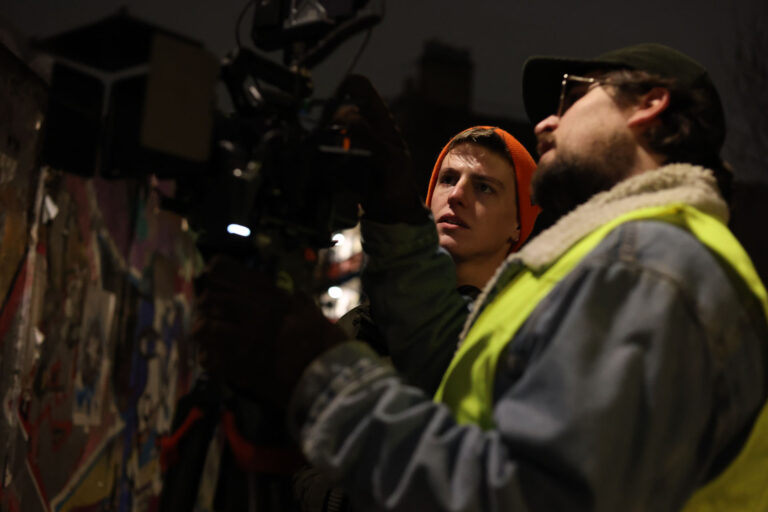
Preparation didn’t prevent mistakes. On the second day, the production had a bus for only four or five hours to film the first sustained conversation between Lukas and Oliver. There was a great deal to get, and they got nearly all of it. Only at the end did they realize they had missed the principal angle on Lukas for a substantial part of the scene.
The editor’s nightmare, on day two. They had started with a master and had coverage of Oliver, which gave the edit enough to work with. Understanding coverage had not made Calvert immune to the pressure of the day; securing the master made the omission survivable.
Bury would also edit the film, but Calvert resists the tidy idea that this meant editorial decisions were being settled throughout the shoot. There was little time to stop and discuss the eventual cut, and he wanted Bury to keep his cinematographer’s head on while the resources and timetable for post were still being worked out. They were aware of how the material might fit together without being able to plan every connection in advance.
Where the Audience Stands
“I wanted to take swings with the shots,” Calvert says. The instruction behind the film’s wide shots and close encounters was to take a definite position. He wanted a distant composition to make the viewer another passerby, briefly watching two people whose history remained unknown. Moving close could place that same viewer inside their circle at a bar or in the hospital. He even entertains the more fanciful possibility that the city itself might seem to be watching.
“To make it feel like they’re just two other people in the crowd, and you don’t know what their story could be,” he says. “But then you follow them, and actually get to find out.” London could be enormous without every scene becoming an advertisement for it. The scale of the image would change how much of these lives the spectator could enter.
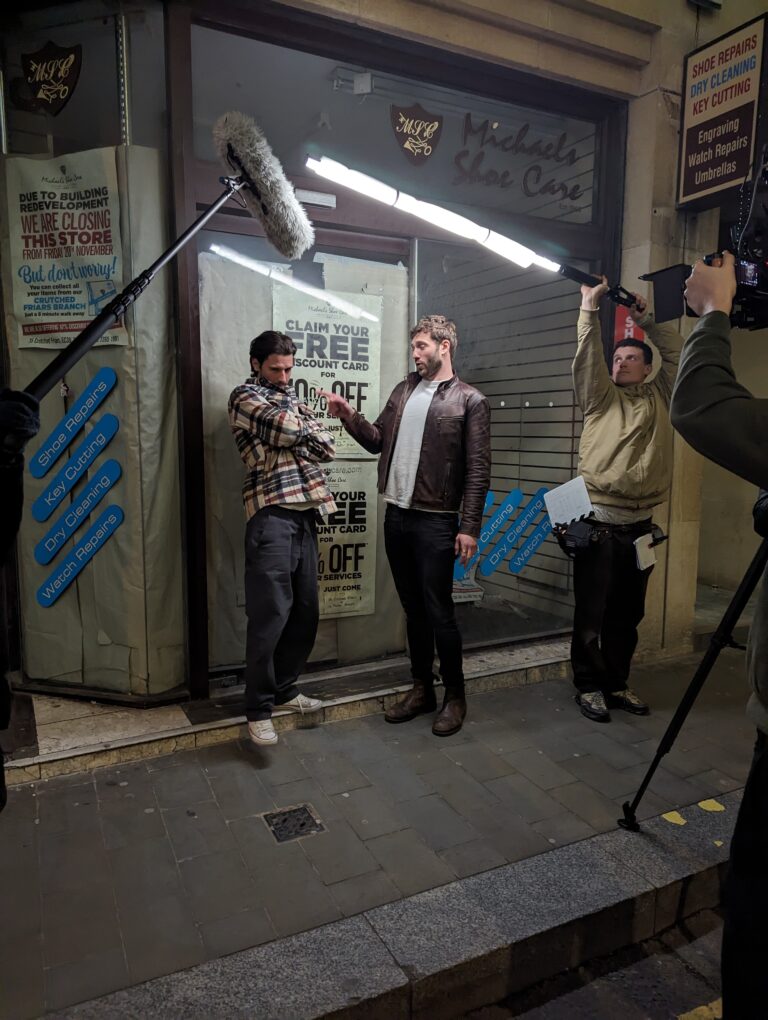
Getting that range meant deciding where the money went. Calvert recalls Bury preferring to put resources into equipment rather than a separate gaffer and lighting department. The choice initially gave Calvert pause, but he trusted Bury’s experience. Lighting would be handled through a small camera team: Bury, a first and second assistant camera, with a B-camera team joining when available.
One image from his account makes that arrangement tangible. After clapping the board, the second AC would sometimes pick up a light on a pole and walk alongside the actors, a traveling streetlight shaping and supplementing London’s illumination as the characters moved. “A really clever idea,” Calvert says. “Really funny to see him just walking around the streets of London holding that.” What appears on screen as part of the night could depend on somebody just outside the frame, walking with it.
He also describes a color journey. The men meet in colder light; warmth arrives with familiarity, somewhat artificial in the underground bar and more enveloping at Moonshine, before the concentrated color of the silent disco. Toward morning, cooler light returns around feelings the men have not fully addressed. The progression follows their uneven closeness rather than simply growing warmer as the hours pass.
Locations offered their own alternatives. The planned Seven Dials setting for the ending was beyond their means, but at the eventual coffee shop a long street lined up with the window. The geometry still pleases him. It gave the final shot room to pull slowly away from the conversation. A different location supplied a different way to leave the film.
Enough Preparation to Let Them Play
The relationship between Anderson and Lincoln required a different kind of restraint. Rehearsals, full run-throughs and time spent together as a group produced an ease the characters couldn’t possess at the beginning. Calvert thinks Anderson had the harder adjustment: Oliver treats almost anybody as a mate, while Lukas must remain closed to an approach the actor playing him already enjoys.
The work was physical. Anderson had to resist turning naturally toward Lincoln and recover a more guarded posture. On set, he spent some setup time apart from the group to find that state. Chemistry mattered partly as something they had to know how to conceal.
Calvert prepared scene notes about what each man was thinking and wanted, and spoke with the actors individually about their characters’ experiences. But he didn’t want every small reaction rehearsed into place. “I didn’t want to over-rehearse the little moments,” he says. “I wanted to let it feel quite natural as it ran.” The preparation gave him something to watch for, while leaving the actors room to discover how it would appear.
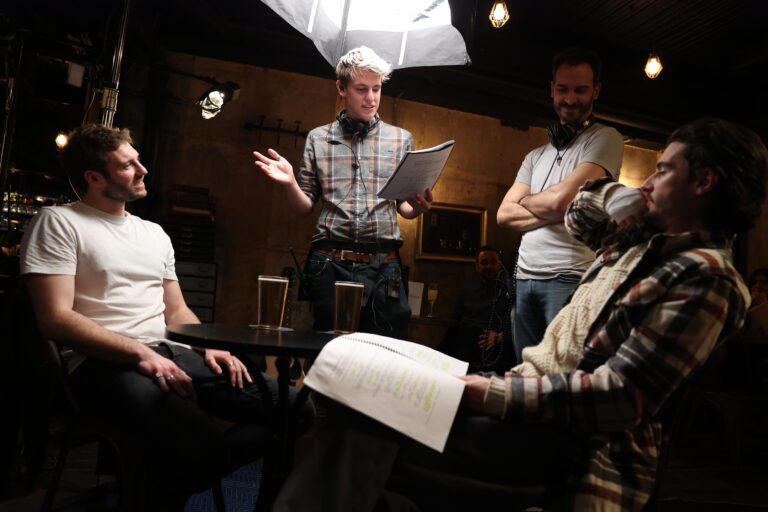
With Lincoln, that sometimes meant reining in a performance that grew larger as Oliver approached vulnerability. Expanding to avoid exposure made emotional sense; the scene still needed tonal balance. Calvert stepped in when necessary, then gave the actors room to continue. “I like to let the actors do their thing,” he says. “I don’t want to over-direct them.”
The same interest in what stays unspoken shaped Emma and John at Moonshine. In the draft Calvert first read, Emma appeared in only a few scenes with barely any dialogue. He felt her perspective on her father deserved more room, both for the point of view she brought to a predominantly male film and for what their relationship could reveal about John. Expanding her gave Beth Rylance more to inhabit.
“I really like when films don’t label every feeling,” Calvert says. “It’s always better if the world feels lived in, and you’ve arrived in the middle of things.” The history between Emma and John could remain partly inaccessible while still being felt. There should seem to be more going on than the visitors have arrived in time to understand.
John was always a role they hoped might attract an established actor: a substantial scene within a limited shooting commitment. David Bradley came aboard through a personal connection on Scerrati’s side, and Calvert credits him with the weight he brought to the character. The opportunity was not simply to have a familiar performer deliver the film’s wisdom. Bradley gave them a person whose thoughts could feel as though they had existed before he began speaking.
His monologue subsequently became shorter in the edit. “We don’t want to risk over-explaining things,” Calvert says. Reducing the speech let its allusions carry more of the work. Expanding Emma while cutting some of John’s dialogue served a related interest: a relationship that could be felt without being fully accounted for.
For Oliver’s song, the listeners’ responses had been discussed during read-throughs. Calvert adds an anecdote he says Lincoln has also told publicly: the actor had bluffed about being able to play guitar before getting the role. On set, however, Calvert found the performance “really raw” and “genuine,” giving the other actors something immediate to receive. The recording was imperfect and needed work, but Calvert values the small reactions through which each listener seemed to take something different from it.
I’ve Got You
The silent-disco kiss took a less direct route to the screen than its finished continuity suggests. In an early draft, the men kissed much sooner, somewhere within the first half-hour. Calvert felt that this cheapened the encounter and moved too quickly for Lukas’s state of mind. Some prospective funders had urged more sex and more obvious appeal, but his own instinct was to wait.
“Given what Lukas has been through earlier tonight,” he says, “I don’t think he’d be rushing in to kiss anyone that quickly.” Later, he wondered whether he had swung too far the other way. Perhaps they shouldn’t kiss until the goodbye. “Which I’m very glad we didn’t do,” he adds.
By the time the disco was being prepared, he intended to try a version with the kiss and another without. They shot the kiss first, and the performance made him feel the alternative was unnecessary. “I got goosebumps watching that on the monitor,” he says. Development had left him with a question; watching the actors supplied his answer.

The emotional route had been discussed closely: Oliver moves toward it, Lukas hesitates, and Lukas eventually kisses him back. Calvert doesn’t claim to have directed every adjustment. “It’s not a horny kiss,” he says. “It’s a much more emotional kiss — a connecting kiss.” The actors had an understanding of what brought the men there, without needing every gesture prescribed.
One detail took him by surprise afterward. As Lukas moves to leave, Oliver holds his headphones in place and speaks a line that becomes unintelligible under the music. The Case Study examined the moment through that loss of access: the words recede, and the bodies carry the next exchange.
“That wasn’t a deliberate choice to withhold it,” Calvert says. He thinks the line may have become muffled in the sound work, but he likes the resulting ambiguity. The words were simply I’ve got you. With the headphones going back on at the same moment, he also leaves open whether Lukas hears them clearly.
His response is notably unpossessive. He doesn’t retrospectively claim to have arranged the effect, and he doesn’t dismiss the reading because it wasn’t planned. Watching someone else encounter the scene gives him another way to appreciate it. The distinction between a director’s intention and a viewer’s experience leaves room for a conversation.
The disco is a particular source of pride, and he distributes the credit immediately: Bury’s camera team, the sound design and Holli Burrows’s transformation of a dingy basement in East London. “It just came together so well,” he says. The convergence matters to him as much as any individual decision.
Three Signs, Three Different Stories
The environmental text provides another chance to separate a finished image from the route that produced it. A lottery logo, a Scarface quotation and the West Virginia sign all became part of the Case Study’s reading of the film. Calvert gives each a different production history.
The crossed fingers were incidental. The corner shop had been difficult to settle, and this one was close to another location the production was using. A planned interior passage with Oliver was dropped because Calvert didn’t think it necessary and the shop was cramped. The camera stayed outside with Lukas, and they placed him beside the logo without Calvert making the symbolic connection. “Just framed it up, went with it,” he says, “but it worked quite well.”
The Scarface quotation received a more conscious welcome. After other options for a late-night food stop fell through, Calvert visited the replacement café and noticed the text on the wall. When they came to frame the conversation, its language about money and power seemed particularly useful. The sign was already there; its place within the film was chosen.
FIND YOUR WEST VIRGINIA was made for the production. Burrows created the sign, and the filmmakers placed it on the bar, where Oliver uses its invitation to begin his appeal to John. Calvert jokes that a third coincidence might have been one too many. He thinks they may even have left it behind at Moonshine when they finished shooting.
The image carries no label distinguishing these origins. A detail built for the film, one recognized on location and another whose resonance emerged in viewing can all enter the same interpretation. Calvert is happy to distinguish them without treating the accidental one as an embarrassment or taking credit for a connection he hadn’t made.
Leave Something Open
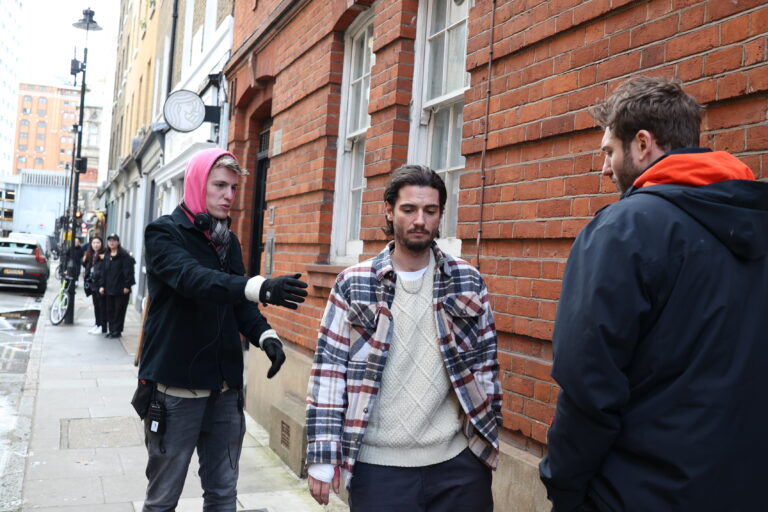
His willingness to keep uncertainty becomes most deliberate at the ending. Early versions extended the coffee-shop material considerably and included a conversation about Lukas helping run Oliver’s club. By Calvert’s account, Scerrati wanted to shoot more to address the remaining questions, while he and Bury preferred to stop before the reunion became a package of solutions.
The disagreement concerned how much to promise. Calvert could imagine the men attempting a shared future, but the proposed arrangement felt too neatly conclusive: “a bit too happy-ending-y.” Their reunion could mark a changed direction without settling the work, money and emotional difficulties awaiting them afterward.
He offers several possible futures: friendship, perhaps, or occasional contact, and a lasting memory of having mattered to one another. He doesn’t imagine them married. “I’ve had those connections with people in the past,” he says. “It’s been one night, or whatever,” and although the relationship may not continue, “you always remember it.” How long something lasts and how much it matters need not be the same thing.
That refusal to let closeness solve everything is already present during Oliver’s performance. Lukas answers Dean’s messages with Yes. I’m ready. Calvert confirms that this means agreeing to pursue the producer’s promised new life, not escaping the arrangement. The song gives Lukas a quiet interval after hours of moving through the city, and that is when his doubts and distress become harder to keep at a distance.
The flashbacks belong to that immediate experience. They are what Lukas is thinking at the moment, prompted by what is happening around him. Removing Oliver’s flashbacks preserved this particular access to Lukas’s thoughts and avoided information Oliver could supply through speech. The man singing and the man listening occupy the same room, but the scene lets us see how differently the moment reaches them.
A Crew That Can Speak
Asked who deserves more recognition, Calvert goes straight back to the people who made the film with him, and especially to Burrows. Where a reader might imagine a substantial production-design team behind the spaces and objects, he describes something far more concentrated. “Her department was just her,” he says.
He describes work extending across production design, costume and set design, with supervision that sometimes reached into other departments too. The two met on his master’s course and worked on one another’s films. She balances this work with other commitments. “I’d work with her on every film if I could,” he says. “She’s just phenomenal.
The small crew also made possible a working atmosphere he wants to keep. As a runner, often joining television productions for individual days, he had experienced departments occupying separate social worlds. On A Night Like This, people knew one another across those boundaries. Friendships formed, actors pitched in, and he helped with equipment at the end of the day.
“I don’t want to be that director that’s just sitting in the trailer until things are ready to roll,” he says. “I want to be there and be involved.”
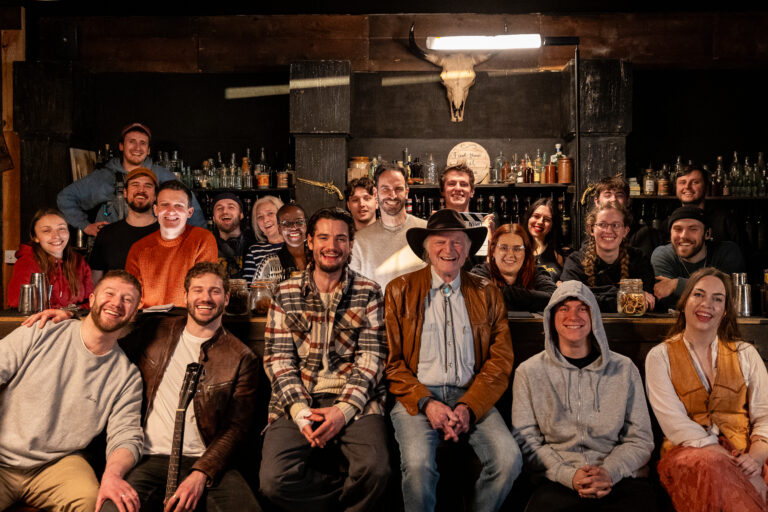
His example involves the guitar, carried through so many locations that he calls it “the bane of my life.” During one scene, they realized Oliver had been filmed without it. While the group considered the continuity problem, the second AC, Eric Gilmore, suggested a handover in the preceding scene that would account for its absence. The solution worked. What stays with Calvert is that Eric felt able to propose it.
A director can remain responsible for the decisions while making the set a place where someone else is free to offer a better one. Collaboration, in Calvert’s account, changes who gets to solve the movie. Bigger resources may alter the organization; he wants to preserve the ease with which an idea can reach the people who need it.
More Than the First Film
Another feature is in development with a writer who approached him. Calvert describes another gay romance, generally lighter in tone, with room for humor alongside substantial concerns. The screenplay was originally set in Los Angeles. When the possibility of relocating it to Britain arose, he suggested Yorkshire, where he is from. He plans to make it there; the theme he offers is homecoming.
That direction is only part of his taste. Event Horizon is among his favorite films for “the texture of it, the characters, the story.” His affection for Interstellar extends to a tattoo of its black hole. Miss Congeniality sits comfortably in the same conversation. He likes horror, science fiction and comedies with more in them than their lightness suggests; the quieter queer films that mattered to him when he was younger needn’t define everything he makes.
One pleasure of showing A Night Like This has been hearing audiences laugh at jokes he added during development, particularly for Oliver. He admits to enjoying the confirmation: I’m funny. He has also enjoyed hearing from viewers of different ages, genders and sexualities who recognize something of themselves in a film he describes as “a lowercase-g gay film.” The experience encourages him to explore a wider range of tones rather than repeat the first feature’s mood.
The reception has brought uncertainty as well. Calvert describes impostor syndrome during production and release, and the outsized force some early negative reviews carried for him. He remembers a long, encouraging conversation with an experienced cinema professional at the BFI Flare premiere, then finding it difficult the next day to give that praise the weight he gave the criticism.
“Why am I giving that more weight in my head than the really glowing view from a cinema professional?” he recalls asking himself. He is learning to distinguish feedback he trusts from the sheer availability of opinion. That does not mean difficult reactions have stopped hurting, or that the film has reached everyone he hoped it would.
Calvert describes the challenge of getting noticed without the production backing of organizations such as the BFI or Film4. Yet the work has opened doors, and a new collaborator now approaches him as someone who has already directed a feature. “I know I can do that,” he says, “because I’ve done it before.” The experience gives him something more useful than an assurance that the next one will be easy.
The friend at the networking event had to remind Calvert that his introduction was out of date. For the next film, that fact is already available to him. He has directed a feature, made choices that worked, recovered from some that didn’t and discovered what other people could bring to the process. There is still no promise that the phone will ring. There is a different starting point when he picks it up.