' ' '
Atlantis Artist Spotlight
Written by Joshua Allen
Founder and Executive Director, The Atlantis Awards
“We could adapt things Hong Kong style, American style, Western style. We mix it all together and make new things.”
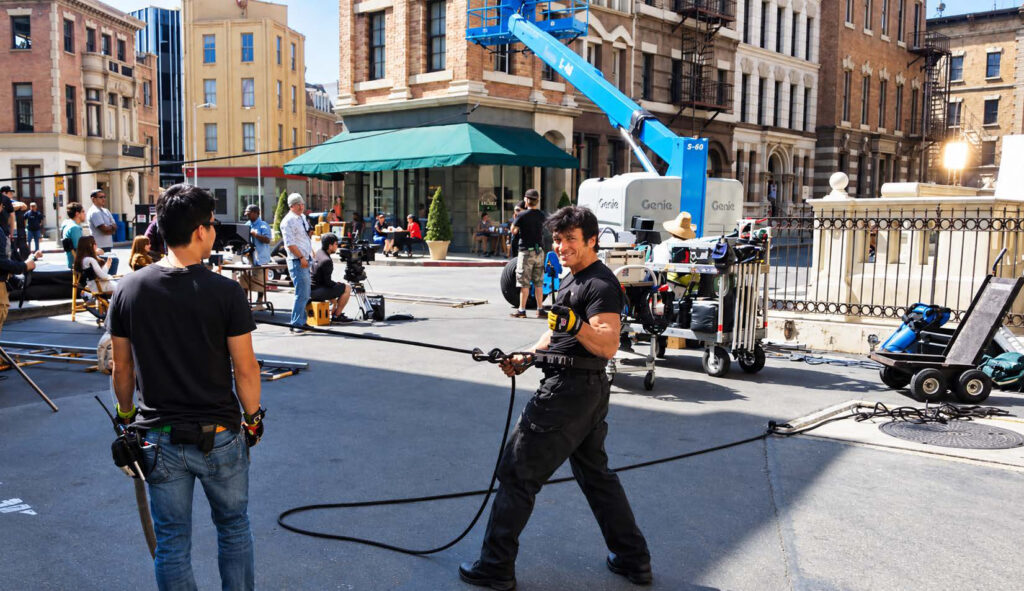
There is a common misconception about fight scenes: that the audience remembers the impact — the punch, the kick, the fall, the collision. In practice, what separates a fight scene that merely displays physical skill from one that becomes storytelling happens somewhere quieter. It happens in the moment before the strike. The decision to commit. The expression after impact. The change in emotion before the next movement begins.
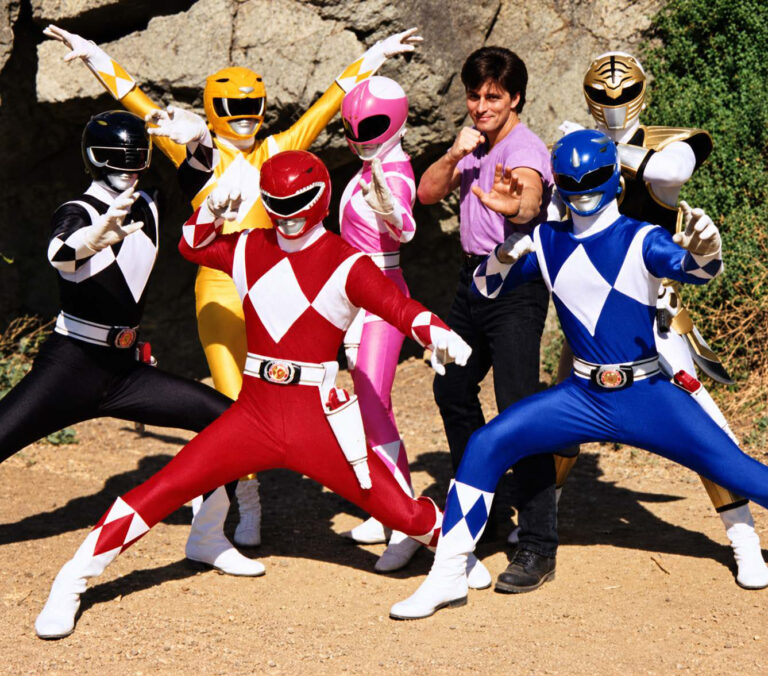
For stunt coordinator, action director, and performer Jeff Pruitt — whose work spans Power Rangers, Buffy the Vampire Slayer, and decades of choreography bridging Hollywood, Hong Kong, and Japanese action traditions — that space between the punches has never been incidental. It’s the entire job.
“With stunt fighting, you don’t want to be real.”
That statement sounds like a contradiction from a man who has spent his career building physical performance out of authentic martial arts training. It isn’t. It’s the key to understanding everything else he has to say.
Discovering the Language of Movement
Pruitt’s introduction to physical storytelling didn’t come from a dojo. It came from a television screen in northern Georgia, watching Batman and The Green Hornet.
“When I saw Kato in The Green Hornet, I became obsessed with martial arts,” he says. “And also, I started watching samurai films and things like that.” From there came an ongoing study of the stunt performers behind the scenes — the men who worked on The Wild Wild West, the silent-film stunt tradition, and eventually Bruce Lee.
The obsession wasn’t passive. “I always had a thing — I grew up racing motorcycles and things like that with my buddies. And on the side, I would do martial arts, and I would just… they were like kickboxers and stuff, but I would convince them, ‘Come on over here, let’s try to recreate this scene from this Bruce Lee movie.’ And they would go along with it. They didn’t really care about stunts, but they would do it because they knew that was in the back of my mind.”
At the time, none of it felt like a viable path. “It seemed like something that would never happen, that I could ever do,” he says of working in Hollywood, “because I was just from a small country town in northern Georgia.” What changed things was a Chuck Norris production passing through town — a chance to be on a set, meet people, and start learning how the work actually got made. Those early connections eventually led to Hollywood, and to an industry where, in his words, “there were only a handful of guys that really did martial arts choreography, because a lot of the stunt guys thought it was a fad that was going to go out.” Pruitt believed otherwise. “I felt like we could change it. We could adapt things Hong Kong style, American style, Western style. We mix it all together and make new things.”
Building a New Action Language
That instinct toward synthesis, rather than imitation, became the throughline of Pruitt’s career. He points to Jackie Chan’s Police Story as a formative influence — specifically, the way wire work was used with restraint. “They would do the wire gags, but they would do it more in a subtle way. It was like just enough, but it didn’t seem like it was floating on a wire or something.” That subtlety became a tool, not a rule — when a project called for something more overtly fantastical, Pruitt would push the other direction entirely. “We did other things where there was some sort of a magical power or something sci-fi, and then I would really fly people around.” Working alongside pioneering rigger Lane Leavitt, who helped develop and refine equipment used throughout the industry, Pruitt kept refining the technique project by project — always asking not “what can we do” but “what does this story need.”
One of the clearest examples of that synthesis in practice came from an unlikely place: a series of Sprite commercials directed by Antoine Fuqua. “He had the idea — at that time he told me, ‘I’ve always had in the back of my mind that I want to do a movie with all rappers and hip-hop stars, but make it a kung fu movie, because we love those kung fu movies.'” The commercials became a testing ground for doing things “exactly the Hong Kong way” — no digital assistance, human-powered wire work only, hip-hop artists in the lead roles. “We shot so much footage. It was so much fun,” Pruitt recalls. Something like that, he says, gave him an excuse to do what he calls “Chinese style.”
The choice of style was never arbitrary. A sequence built around ordinary people required a different physical vocabulary than one involving supernatural ability — and figuring out which vocabulary a scene needed, before choreographing a single beat, was where the real design work happened.
The Difference Between Fighting and Performing a Fight
Pruitt is direct about the gap between being a fighter and being able to perform one on camera — and it isn’t a gap of skill. It’s a gap of instinct.
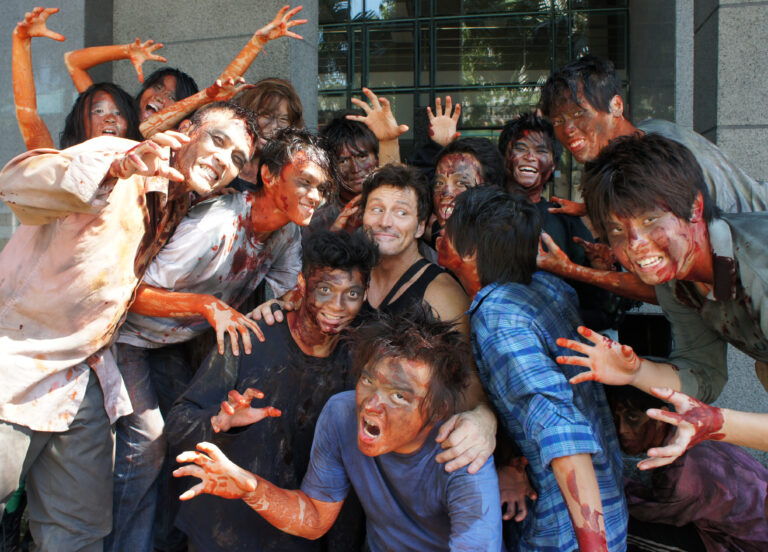
“Sometimes I would get a guy who’s a great fighter, awesome martial artist — he would kill all of us — but he can’t do stunts,” Pruitt explains. “Because when he fights, he’s so used to not showing anything, not telegraphing. I would try to punch some guys, and it would just go by — they would barely move! They’re used to moving out of the way of a punch, not sticking their face out or squaring their body up to get kicked.”
What the camera needs runs directly against what real combat trains a fighter to suppress. “I’d go, ‘No, you’ve got to step in and go with it, and make a crazy face as you throw yourself!'”
This is where Pruitt’s cross-cultural education paid off most directly. American stunt tradition, he explains, had actually trained the opposite instinct into performers for decades — background stunt guys were taught to underplay everything, to the point directors would have to remind them to just stand still and stop hamming it up in the frame. What he learned instead, working with Japanese and Hong Kong performers, was a completely different discipline: “When you’re doing martial arts action, you deliberately overact on purpose. Your face, everything — whether you’re punching or whether you’re getting hit, the reactions you do, everything you make over the top.” Dramatic actors, he notes, work in the opposite direction — subtlety calibrated precisely to the size of the shot. Action requires the inverse. “It’s like violent dancing or something.”
Sophia Crawford and the Character Inside the Movement
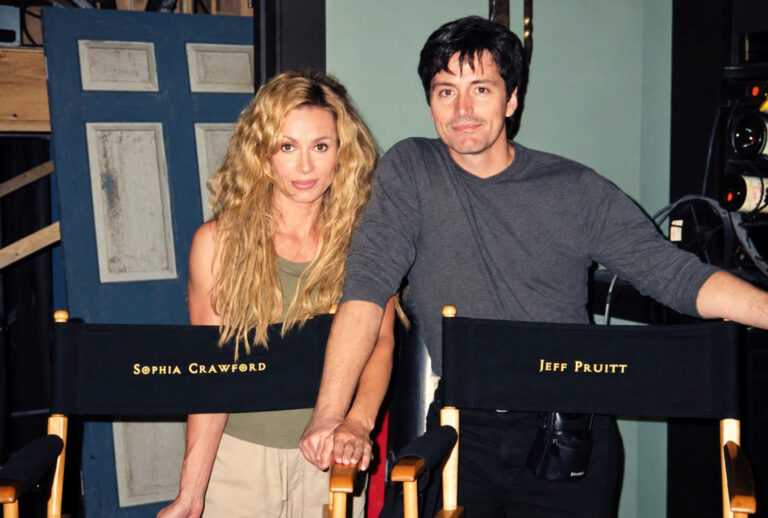
No collaborator shaped Pruitt’s philosophy more directly than stuntwoman Sophia Crawford. The two had crossed paths in Los Angeles’ small, closely connected community of Hong Kong-trained performers years before they worked together — Pruitt had noticed her from a distance for some time before finally meeting her, introduced by fellow performer Gary Daniels, who’d known her in Hong Kong. Not long after, when Power Rangers needed a new Pink Ranger following a cast departure, Crawford came in through an open audition. “I thought, ‘I thought you were just going to be an actress, what are you doing here?'” Pruitt recalls asking her — Crawford had settled into Hollywood pursuing acting work by then. Her answer was simple: “I just miss doing the action in Hong Kong. I’m dying because I’m not doing action in Hollywood — just doing like one kick, one punch, that’s the whole fight!”
By the time Pruitt came on as Buffy’s stunt coordinator, Crawford had already appeared in the show’s pilot under a different coordinator — cast, in part, because Joss Whedon noticed something in her he called “good kinetics.” Pruitt didn’t need convincing. “I just want Sophia to be the Slayer,” he remembers Whedon saying. “That’s it.”
What made her work distinct wasn’t athleticism alone. It was training under performers like Yukari Oshima in Hong Kong’s “girls with guns” era, where combat itself was expected to carry emotional information — silent-film-style expression built to read without sound. “There’s a way of moving that the Hong Kong stuntmen taught her,” Pruitt says. “Others would just perform a kick: they would stand there in a stance, perform a kick, perform a punch, like a karate class. They would yell, but there’s nothing behind it.”
Crawford’s technical fluency became so distinctive that other productions took notice — literally. Pruitt recalls sitting in a producer’s office, catching a stunt sequence on a cop show playing in the background, and remarking on how closely the fighting resembled his own choreography. “I said, ‘That girl moves like Sophia!'” Crawford, walking in at that exact moment, corrected him: “Honey, that’s me.” She and a fellow stuntman had moonlighted on the other show. The response from Buffy’s producers was immediate — Crawford’s contract was amended to prevent her from performing action on any other series. “This is the Slayer,” Pruitt remembers being told, “and the Slayer is only here.”
Building One Performance from Two Bodies
None of this should suggest that Crawford alone “was” Buffy in action. Television schedules rarely allowed a fight to be built around the principal actor’s full participation, and Pruitt’s solution wasn’t to substitute Crawford and simply conceal the substitution. It was to construct a single continuous performance out of two different bodies.
“We had no time at all,” Pruitt explains. “In order to get stuff done, we would just roll two cameras, move around, roll two cameras. Sophia would do the whole fight, and then we’d bring Sarah out and do three close-ups with her depending on what it was and how much we needed to do.” Those close-ups weren’t arbitrary insertions — a stake driven home, a line delivered mid-fight, the beginning of a specific movement — chosen precisely because they were the moments the cut could use to hand the performance back and forth without the audience feeling the seam. “If we could get her to start to kick or start to punch, and then we cut into Sophia, then we could get things done.”
What the audience experienced as one uninterrupted character fighting was, in production, a collaboration: Crawford’s sustained physical performance, Gellar’s targeted close-ups, and an edit built specifically to connect the two without a visible break. Buffy’s physical identity had a primary author in Crawford. The completed performance the audience actually saw had several.
The Playground Method
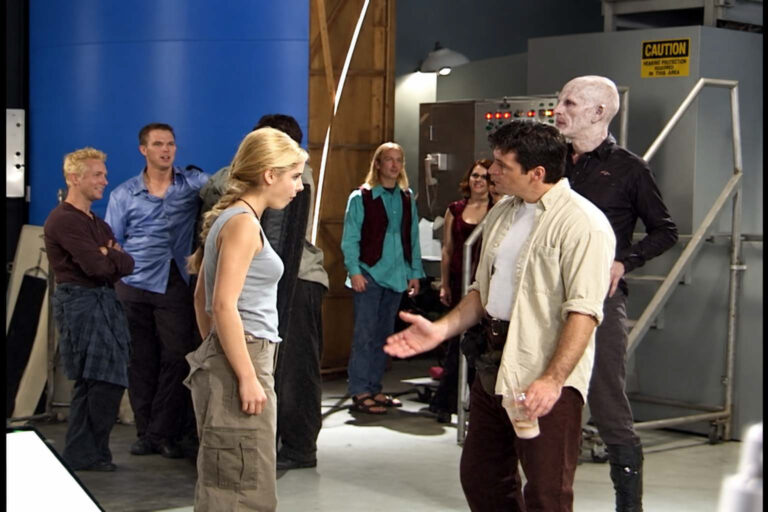
Much of Pruitt’s process on Buffy grew out of a habit he discovered he shared, almost by accident, with Joss Whedon: both men carried notepads everywhere on set, constantly jotting down ideas as they walked the show’s standalone backlot. “I would look around and I think, ‘Oh, this is what I could do here in this location,'” Pruitt says. Whedon was doing the same thing for dialogue and jokes. The two would compare notes, quite literally, and build choreography directly out of the geography of a set rather than working purely from the page.
That looseness extended into the writing itself. Some fight scenes arrived in the script as nothing more than a stage direction — “She Pruitts the SOB,” as Whedon once wrote — leaving Pruitt to invent the entire sequence on the day.
One recurring production tension became, in hindsight, a genuinely funny piece of behind-the-scenes history: Pruitt’s insistence — largely unsuccessful at the time — that the camera avoid lingering on Crawford’s face during fight sequences, since audiences were meant to read her as Buffy, not as her double. Standard-definition television in the 1990s made the rule feel low-stakes to the crew. “Ah, Jeff, you’re getting too worried,” he remembers being told. “Nobody can see it.” One moment in particular has become a favorite behind-the-scenes anecdote: Crawford, rigged on a wire with a wind machine blowing her hair across her face mid-stunt, was approached by a producer who asked her to lift her head so the camera could see her better. Pruitt had to step in. “Guys, that’s not the Buffy face.”
The Invisible Authors of Action
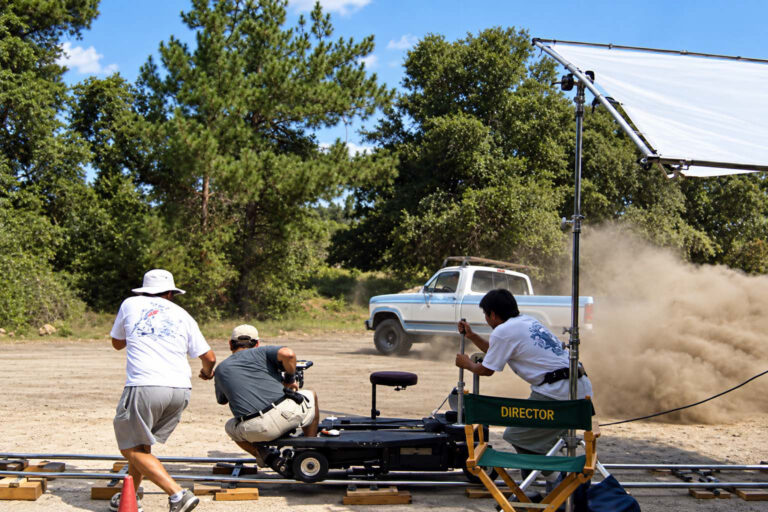
Pruitt has spent much of his career fighting for a version of credit that the industry, structurally, resists granting — and the clearest example of the problem is also the smallest.
When Crawford appeared in costume for a McDonald’s commercial as the Pink Ranger, performing the character’s signature physicality for the camera, producers argued she wasn’t “playing” the role because a few lines were dubbed over by the credited actress — and refused her residuals accordingly. Pruitt’s frustration with the loophole is still audible years later: “The heck I’m not! I’m the Pink Ranger every day.” The system, in that single moment, decided that only the voice counted as the character. The body performing it did not.
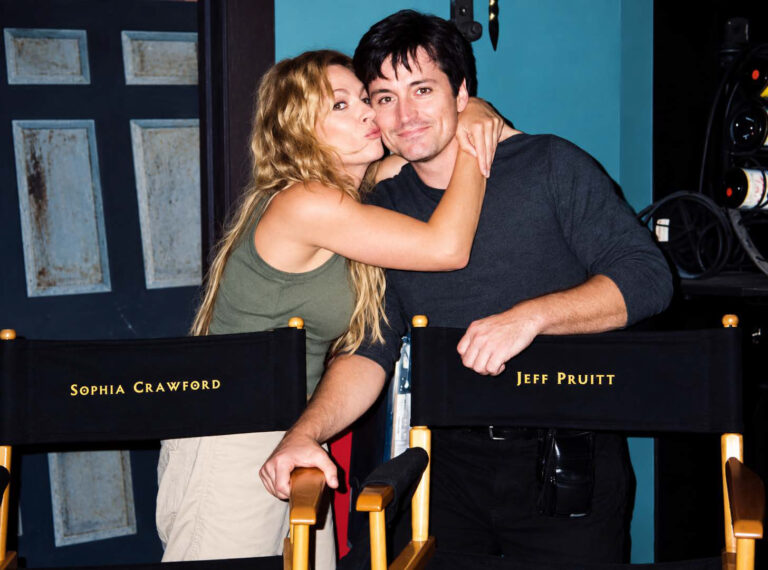
That same logic showed up everywhere, at every scale. Early in Buffy’s run, Pruitt made two specific demands for Crawford: a chair with her name on it, and an on-screen credit — something Pruitt believes no stunt double on American television had received before. Both were approved. But recognition, he found, had to be defended season after season, in a much smaller and less visible battle. At the start of every season, studio representatives would sit down with him to review the opening title sequence, stunt by stunt, deciding who qualified for on-camera residuals.
“What they would do is sit there with a notepad,” Pruitt says, “and then confer with each other about which names to cross out.” He recalls one specific exchange, defending a stunt performer whose fall the studio wanted to disqualify: “Guys, that’s him! He’s doing his stunt.” The response: “Well, technically he’s going in the air and spinning, but we don’t see him hit the ground, so really that doesn’t count.” Pruitt’s answer was to challenge them outright — “If it’s not a stunt, then let me see you do it right now” — and, when that failed, to call the performers directly and warn them to be ready to take the fight to their union.
The same pattern repeated at a structural level. Pruitt recalls that when stunt coordinators finally received a dedicated SAG contract after years of advocacy, residual payments disappeared from the new structure — coordinators earned more upfront but nothing once a show finished airing. Riggers lost similar protections show by show.
From Motion Capture to Artificial Intelligence
Pruitt’s relationship with new technology goes back further than most people in his field — and it started with a warning he didn’t fully understand at the time.
While choreographing a Buffy video game in the 1990s, playing a vampire opposite Crawford’s Buffy, a developer working on the project told him something that stuck. “You know, a few years from now, you might be looking at a video game and you’re going to see that,” Pruitt recalls being told. Confused, he asked whether someone else would be performing the moves he was creating. The answer: no one would need to. “We’ve captured your motion. Now that we’ve captured your motion, we can take that action and put it on any one of these characters. No one will ever know that was you, but that’s where it came from.”
Pruitt sees that same dynamic accelerating now, in a form the game developer could only gesture toward. Discussing modern AI video generation, he’s blunt about how he believes the technology works: “It’s copying it shot by shot, move by move, from what it’s already seen.” Whether or not every generative system can be described so literally, the concern underneath his statement is clear: contemporary tools can absorb physical vocabulary from existing human-made work while making the original source increasingly difficult to identify. “It’s doing exactly what those guys said back in the 90s to me: we’re going to capture you. Well, now they don’t even need you to come in and put little green things all over your body. They just take the footage from the film, plug it into AI, and AI learns.”
The industry impact isn’t hypothetical to him. Pruitt says he has heard increasingly troubling accounts from stunt teams whose previsualization work was used to construct final digital action after the performers themselves were dismissed from the production. Without access to the productions or contracts involved, those accounts are difficult to verify. What matters is the fear they expose: that a performer may be hired to invent a sequence once, while the production retains the movement indefinitely.
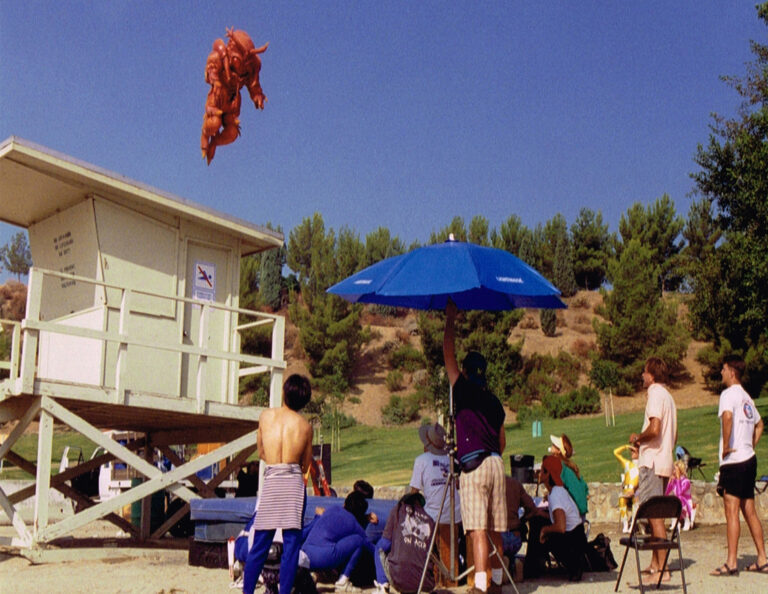
Asked what still separates the real thing from its digital equivalent, Pruitt doesn’t hedge. “There’s something about it that even the best AI-generated fight scenes… I can still tell it’s AI. I don’t feel that connection because it’s not real people.” He traces the same feeling back to his own childhood reaction to practical stunt work over CG spectacle, and to something Power Rangers fans have told him for years about the show’s Japanese-shot giant-robot sequences: real performers in real suits, doing something a viewer can tell actually happened. “There’s just something about it because it’s a real guy,” he says. “And they liked it that way.”
Legacy: The People Who Continue the Language
Some of Pruitt’s clearest legacy runs through two names now synonymous with modern action filmmaking: Chad Stahelski and David Leitch, both of whom worked with him early in their stunt careers — Stahelski as an Angel double on Buffy, Leitch as a background vampire and, eventually, the show’s first Spike double.
The Stahelski connection led somewhere neither of them anticipated. A dinner with choreographer Yuen Woo-ping, in town scouting a double for Keanu Reeves on an upcoming project the crew was struggling to describe in English — “The world isn’t the world, we’re living in a… but we’re asleep” — ended with Pruitt recommending his own Angel double for the job. That project was The Matrix.
Years later, on the Buffy set, Leitch pushed Pruitt directly about ambitions of his own. “You’re the stunt coordinator,” Pruitt remembers him saying. “Why don’t we do that thing you wanted to do?” Pruitt’s answer, at the time, was practical rather than encouraging: the only way to fully execute a vision on your own terms was to become the director and producer yourself — control the budget, control the crew — and that kind of leverage almost never arrives. “So just drop it,” he told him.
Leitch didn’t. He went out, started stunt coordinating and second-unit directing on his own projects, and eventually returned to tell Pruitt he’d understood exactly what he meant. Not long after, he and Stahelski created John Wick.
Pruitt’s takeaway from the story doubles as something close to a philosophy of mentorship: “Anytime you want, you should just dare a stunt person and tell them, ‘No, you can’t, it’s impossible. You have to be the producer and director, it’s the only way.’ Then they’ll go out and become the producer and director.”
The Performance Between the Punches
Across every era of his career — practical stunts, wire rigs, motion capture, and now the leading edge of AI — Pruitt returns to the same measure of success: not what a sequence shows the audience, but what it makes them feel. A punch is not a punch. A fall is not a fall. Each is a decision, made by a specific person, about what a character is thinking and feeling in the half-second the audience isn’t consciously watching for it.
That is the part of the craft Pruitt has spent decades trying to protect — in contract negotiations, in credit disputes, in his own choreography, and now in conversations about what artificial intelligence can and cannot yet replicate. The technology may eventually be able to produce the movement. What it has not yet learned to produce is the reason behind it.
“You’ve got to do that in the fight scenes,” Pruitt says. “You’re acting in the fights.”
The audience rarely remembers the technique. They remember the character revealed through it — even when they never learn the name of the performer who made that character move.