' ' '
Atlantis Artist Spotlight
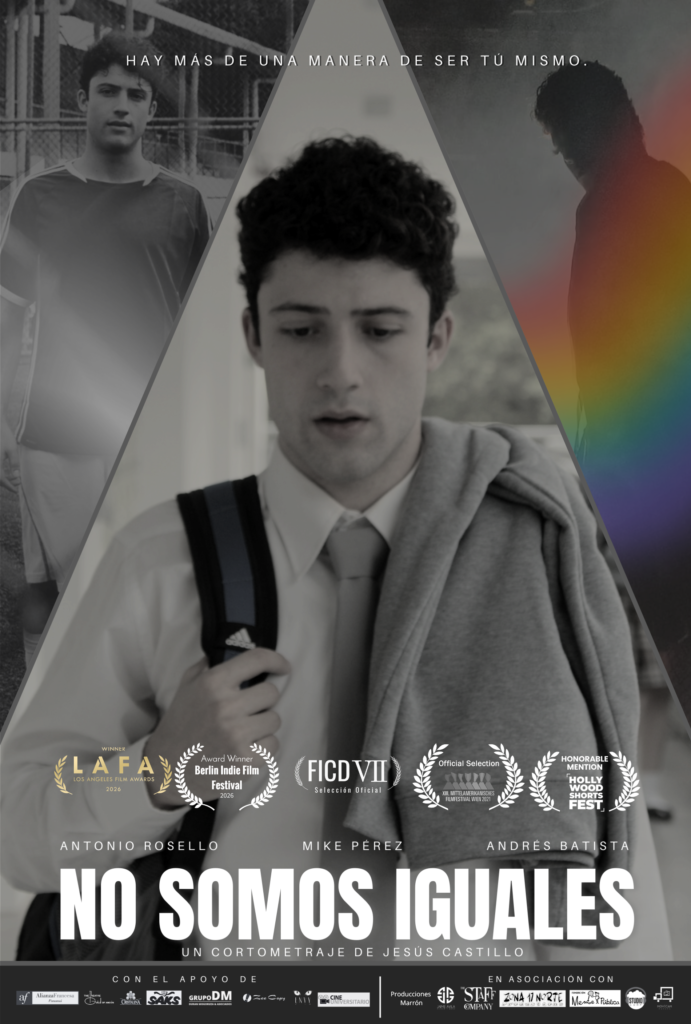
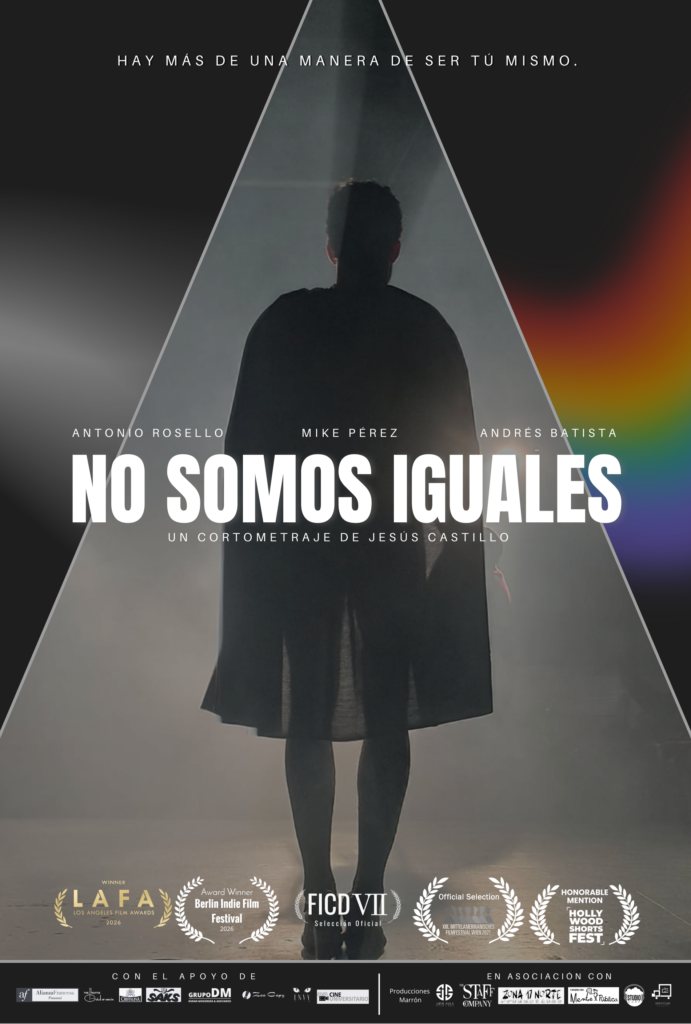
NO SOMO IGUALES
We Are Not the Same
Jesús Castillo (Director)
Antonio Rosello (Diego) | Mike Pérez (Sixto)
Para el Director Jesús Castillo
El origen de la visión: Pasaste varios años perfeccionando tu formación entre Panamá, Colombia y Guatemala. ¿Cómo influyeron esos distintos entornos creativos en la forma en que decidiste retratar la realidad panameña en tu ópera prima?
R: El hecho de conocer distintas culturas y trabajar en diferentes países me permitió ver con mayor claridad cómo se abordan ciertos temas en nuestra región. El tema principal del corto está relacionado con la comunidad LGBT, y durante ese proceso me di cuenta de que, aunque en Panamá muchas veces nos presentamos como una sociedad abierta o moderna, en realidad nuestro sistema y nuestras dinámicas sociales aún están por detrás de otros países hermanos, como Colombia.
Cuando comencé a desarrollar la historia, el guion no tenía un enfoque político ni social tan marcado. En un inicio se trataba simplemente de Diego, un joven que quería interpretar un personaje que iba más allá de lo que su padre probablemente aceptaría, especialmente porque en muchos contextos el teatro y las artes aún se asocian con estereotipos ligados a la comunidad LGBT.
Con el tiempo, y gracias a las experiencias en estos otros países, el proyecto fue evolucionando. Me di cuenta de que la historia no solo debía abordar un conflicto personal, sino también las tensiones sociales que rodean a los personajes. Empezaron a aparecer temas relacionados con la presión social, la influencia de la religión en la política panameña y cómo esas dinámicas pueden terminar afectando la libertad individual de las personas. Todo eso fue puliendo la historia hasta llegar a la versión final.
For Director Jesús Castillo
The Origin of the Vision: You spent several years refining your training across Panama, Colombia, and Guatemala. How did these distinct creative environments influence the way you decided to portray Panamanian reality in your debut feature?
A: Having experienced different cultures and worked in various countries allowed me to see with greater clarity how certain issues are addressed in our region. The central theme of the short film revolves around the LGBT community, and during the creative process, I realized that—although we in Panama often portray ourselves as an open or modern society—in reality, our systems and social dynamics still lag behind those of our neighboring nations, such as Colombia.
When I first began developing the story, the script did not have such a pronounced political or social focus. Initially, it was simply about Diego—a young man who wanted to play a character that went beyond what his father would likely accept, particularly because, in many contexts, theater and the arts are still associated with stereotypes linked to the LGBT community.
Over time—and thanks to my experiences in those other countries—the project evolved. I realized that the story needed to address not only a personal conflict but also the social tensions surrounding the characters. Themes began to emerge regarding social pressure, the influence of religion on Panamanian politics, and how these dynamics can ultimately impact individual freedom. All of these elements served to refine the story, leading it to its final version.
El catalizador personal: Has descrito esta película como un proyecto profundamente personal. Más allá de los temas sociales generales, ¿hubo una imagen o un momento específico que despertó por primera vez la historia de Diego?
R: Sí. Recuerdo un momento muy claro mientras trabajaba en una obra de teatro. Uno de mis compañeros tuvo la oportunidad de interpretar un papel que implicaba hacer drag, y era perfecto para el personaje. Tenía el talento, la presencia escénica y todo lo necesario para hacerlo muy bien.
Sin embargo, decidió no aceptar el papel porque le preocupaba cómo su familia podría verlo interpretando ese personaje. La imagen que su familia tenía de él, y el miedo a romper con esa percepción, lo afectaba profundamente.
Ese momento me marcó mucho. Me hizo pensar en cuántas personas renuncian a partes de sí mismas o a oportunidades importantes por miedo a cómo serán percibidas por su entorno. De alguna manera, esa experiencia fue una de las primeras semillas de lo que más tarde se convertiría en la historia de Diego.
The Personal Catalyst: You have described this film as a deeply personal project. Beyond the broader social themes, was there a specific image or moment that first sparked the story of Diego?
A: Yes. I remember a very distinct moment while I was working on a stage play. One of my colleagues had the opportunity to play a role that involved performing in drag, and he was perfect for the character. He had the talent, the stage presence, and everything else needed to do it exceptionally well.
However, he decided not to accept the role because he was concerned about how his family might react to seeing him portray that character. The image his family held of him—and the fear of shattering that perception—affected him deeply.
That moment left a lasting impression on me. It made me reflect on how many people sacrifice parts of themselves, or pass up significant opportunities, out of fear of how they might be perceived by those around them. In a way, that experience planted one of the first seeds of what would later evolve into Diego’s story.
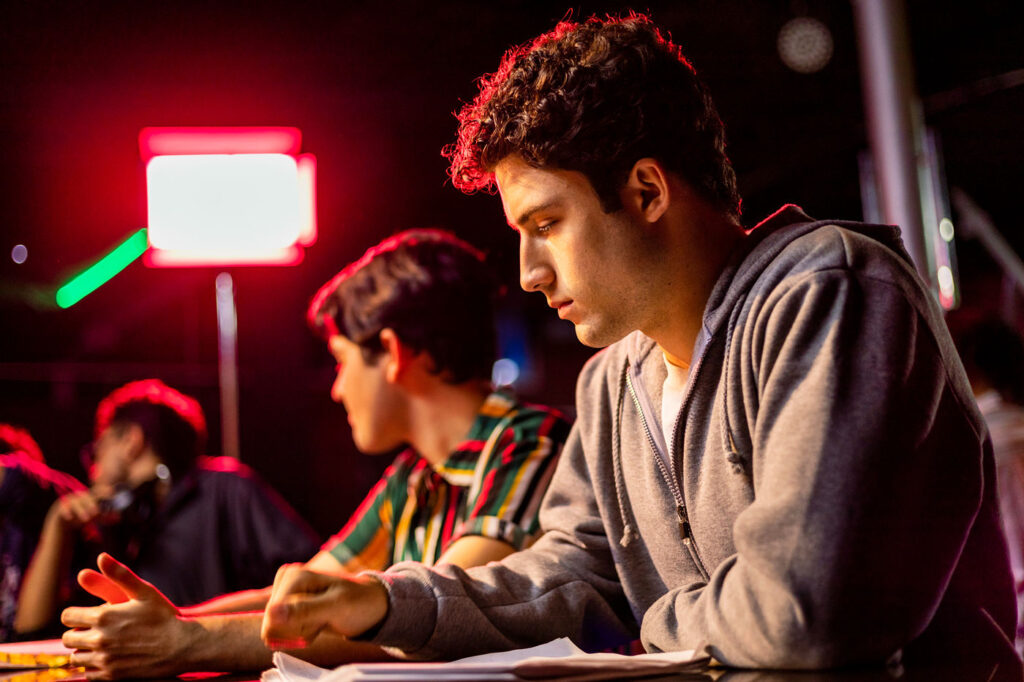
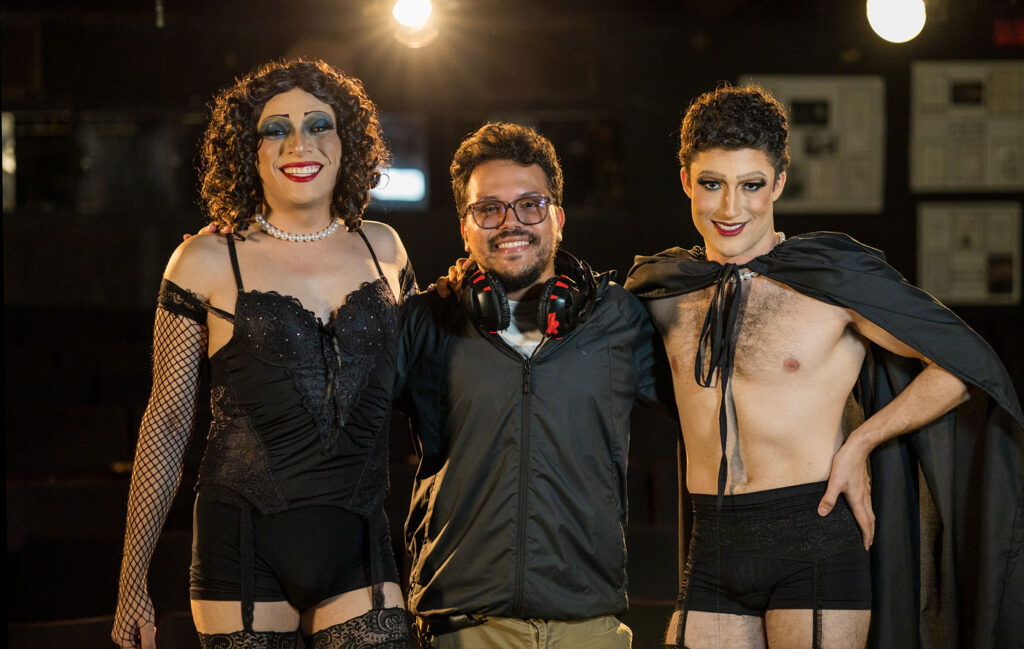
Una perspectiva íntima: En lugar de construir la película a partir de discursos directos o confrontaciones explícitas, permites que el público observe el conflicto interno de Diego a través de sus experiencias. ¿Qué te llevó a confiar en la narración visual más que en el diálogo explícito?
R: Siempre me han interesado las películas que transmiten emociones a través de las expresiones de los actores y de lo que ocurre en pantalla, más que a través de largos diálogos explicativos. Cuando una historia se cuenta de esa forma, el espectador puede conectar de manera más directa con el personaje y desarrollar una empatía más profunda.
Además, me interesa que ciertas cosas no queden completamente explicadas. Cuando un espectador puede identificarse con una emoción o con una experiencia desde su propia perspectiva, la historia se vuelve más universal.
Por otro lado, también hay conflictos que no siempre se expresan abiertamente. Muchas veces, cuando una persona está atravesando un proceso interno o aún no se acepta completamente, el verdadero conflicto ocurre dentro de ella misma. Afuera quizás solo vemos pequeñas mentiras, evasiones o silencios, pero la batalla real está ocurriendo internamente.
Por eso quería que la película mostrara la experiencia desde la vulnerabilidad de Diego. Que el público pudiera observar lo que le sucede por dentro, más que simplemente presenciar discusiones o confrontaciones externas, que esas ya estamos acostumbrados a ver a diario.
An Intimate Perspective: Instead of structuring the film around direct speeches or explicit confrontations, you allow the audience to observe Diego’s internal conflict through his experiences. What led you to rely on visual storytelling rather than explicit dialogue?
A: I have always been drawn to films that convey emotions through the actors’ expressions and through what unfolds on screen, rather than through lengthy, explanatory dialogue. When a story is told in this way, the viewer can connect more directly with the character and develop a deeper sense of empathy.
Furthermore, I am interested in leaving certain things—certain aspects—unexplained. When a viewer can identify with an emotion or an experience from their own perspective, the story becomes more universal.
On the other hand, there are also conflicts that are not always expressed openly. Often, when a person is undergoing an internal process—or has not yet fully come to accept themselves—the true conflict takes place within them. On the surface, we might only see small lies, evasions, or silences, but the real battle is being waged internally.
That is why I wanted the film to portray this experience through the lens of Diego’s vulnerability—so that the audience could observe what is happening inside him, rather than simply witnessing external arguments or confrontations, which are things we are already accustomed to seeing every day.
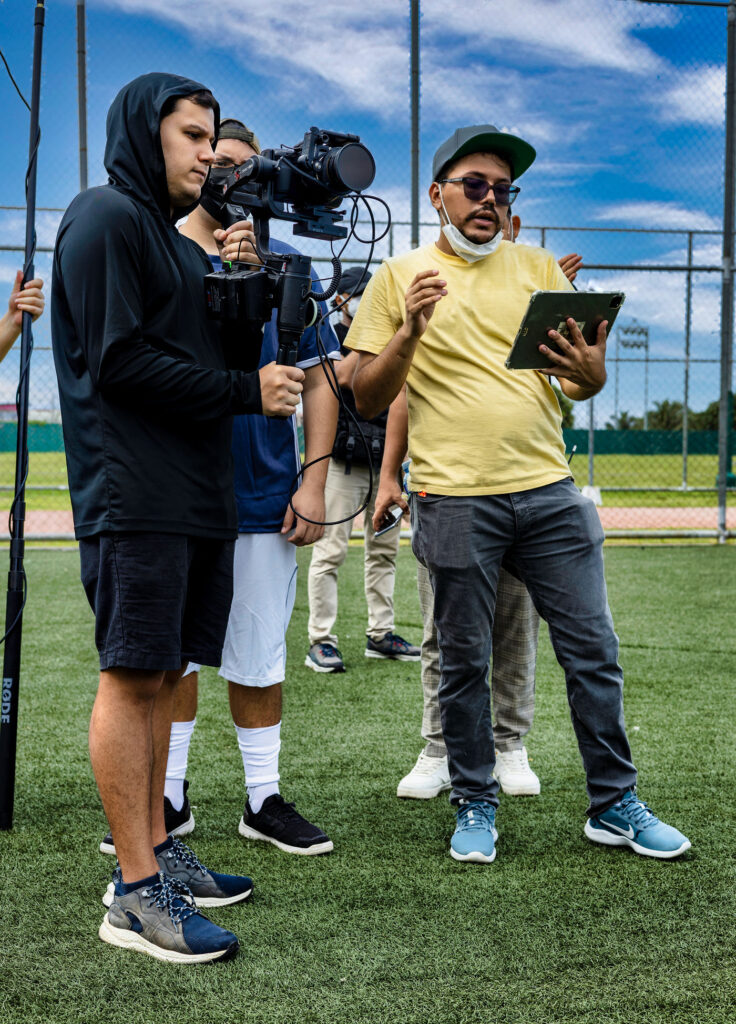
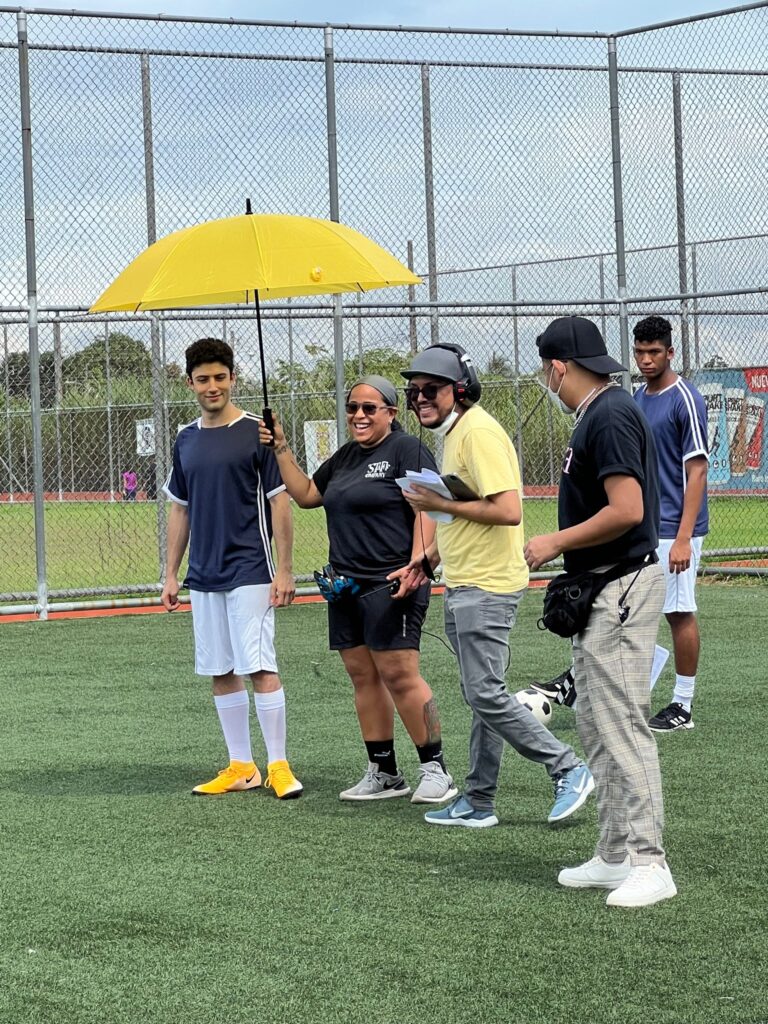
La arquitectura del contraste: Diego se mueve entre dos mundos muy distintos: el campo de fútbol y el escenario teatral. ¿Cómo utilizaste el encuadre, la iluminación y el movimiento para diferenciar visualmente estos dos espacios?
R: Este fue uno de los aspectos más complejos de la película, porque en realidad Diego no está rechazando el fútbol. Él ama el fútbol. El conflicto no es abandonar un mundo para entrar en otro, sino enfrentar un momento de su vida en el que debe decidir entre continuar entrenando o comprometerse con una obra de teatro que siempre ha querido hacer.
Mi preocupación era que el público interpretara que el fútbol representaba algo negativo o que Diego lo estaba dejando atrás, y no era así. Por eso trabajamos mucho en cómo representar visualmente ambos espacios.
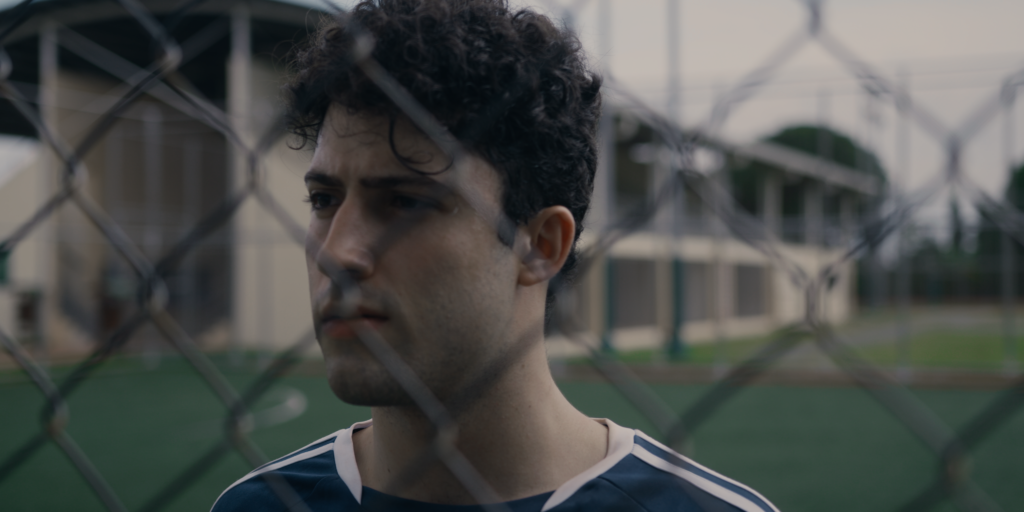
En el campo de fútbol, aunque estamos en exteriores, utilizamos una iluminación más nublada y una colorización que transmite cierta sensación de incertidumbre. Diego es feliz ahí, se siente parte de una familia, pero al mismo tiempo su vida está atravesando un momento complejo. Por eso hay una mezcla entre energía y una atmósfera ligeramente oscura.
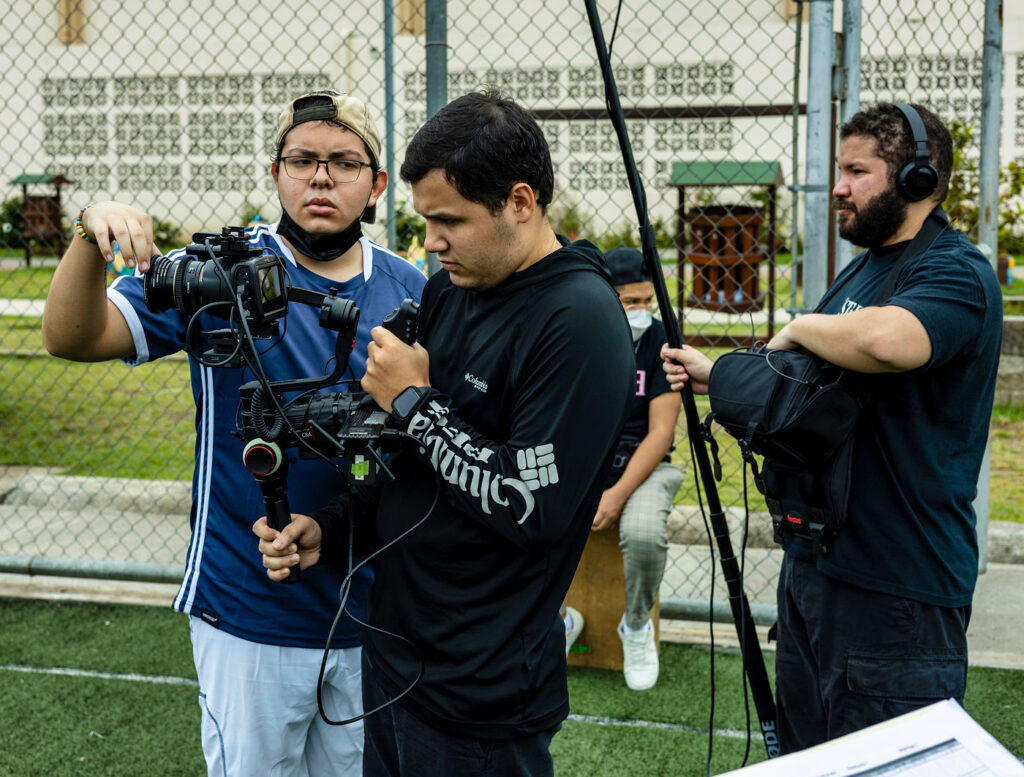
Los movimientos de cámara en el fútbol son más dinámicos, más ágiles, acompañando el movimiento del juego y la energía del espacio.
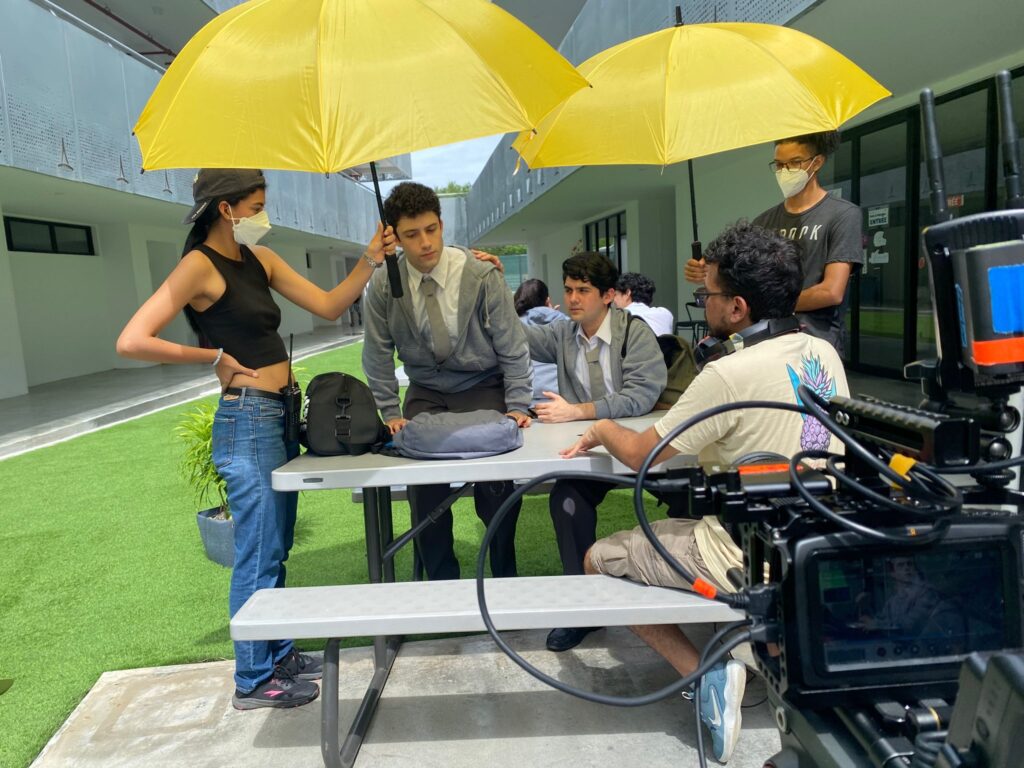
En contraste, el mundo teatral está filmado de una manera mucho más estática. Vengo del teatro, y en el teatro el espectador observa la acción desde una única dirección: el frente. Por eso utilizamos encuadres más generales, con fondos planos y muchas veces sin puntos de fuga, como si el espacio fuese una pared o un escenario cerrado.
Incluso cuando no hay escenografía, el teatro muchas veces trabaja con un espacio vacío donde lo importante es el actor y la acción. Esa estética nos ayudó a crear una imagen más frontal, más plana, que contrasta con la movilidad del mundo del fútbol.
The Architecture of Contrast: Diego moves between two very distinct worlds—the football pitch and the theatrical stage. How did you use framing, lighting, and movement to visually differentiate these two spaces?
A: This was one of the most complex aspects of the film, because, in reality, Diego isn’t rejecting football. He loves football. The conflict isn’t about abandoning one world to enter another, but rather facing a moment in his life where he must decide between continuing to train or committing to a stage play he has always wanted to do.
My concern was that the audience might interpret football as representing something negative, or assume that Diego was leaving it behind—which wasn’t the case. That is why we worked extensively on how to visually represent both spaces.
On the football pitch—even though we are shooting outdoors—we utilized cloudier lighting and a color palette that conveys a certain sense of uncertainty. Diego is happy there; he feels like part of a family. Yet, at the same time, his life is passing through a complex phase. Consequently, there is a blend of high energy and a slightly somber atmosphere.
The camera movements during the football sequences are more dynamic and agile, tracking the flow of the game and the energy of the space.
In contrast, the theatrical world is filmed in a much more static manner. I come from a theater background, and in the theater, the spectator observes the action from a single direction: the front. For this reason, we employed wider framing—often featuring flat backgrounds and lacking vanishing points—as if the space were a solid wall or a self-contained stage.
Even in the absence of elaborate set design, theater often operates within an empty space where the focus lies entirely on the actor and the action. This aesthetic helped us craft a more frontal, flatter visual style—one that stands in stark contrast to the dynamic mobility of the football world.
El símbolo de los tacones rojos: Los tacones rojos se convierten en una de las imágenes más poderosas y recurrentes de la película. ¿En qué momento surgió este símbolo durante el proceso creativo y qué representa para ti?
R: Los tacones estuvieron presentes desde el principio. Desde la primera versión de la historia que escribí para un diplomado, sabía que ese elemento debía existir.
Con el tiempo me di cuenta de que los tacones son una prenda que culturalmente marca una diferencia muy fuerte entre lo que se considera masculino y lo que se considera femenino. Cuando un hombre utiliza tacones, muchas personas lo interpretan como una transgresión directa a esas normas.
Por eso el simbolismo nace justamente de ahí: de romper con esa idea rígida de lo que se supone que debe usar un hombre o una mujer.
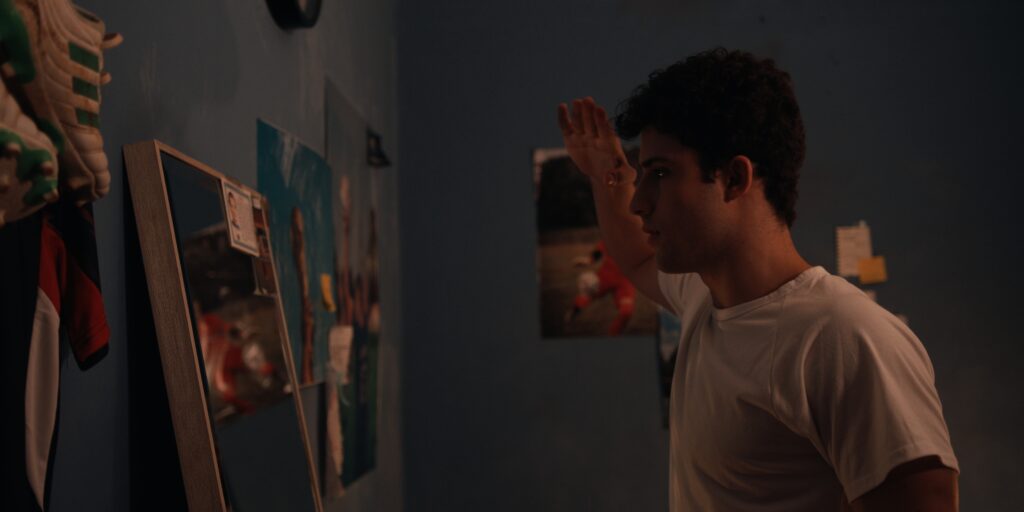
Para mí, los tacones funcionan como un hilo conductor dentro de la historia. Representan la evolución de Diego y su proceso de aceptación. Al inicio son algo completamente ajeno a él, algo que requiere adaptación y aprendizaje. Pasar de usar zapatos deportivos planos a caminar con tacones altos implica literalmente encontrar un nuevo equilibrio.
A medida que Diego empieza a dominarlos, también empieza a fortalecerse internamente. Los tacones dejan de ser solo un símbolo de aceptación y se convierten en una representación de su propia fuerza.
The Symbol of the Red Heels: Red heels emerge as one of the most powerful and recurring images in the film. At what point did this symbol arise during the creative process, and what does it represent to you?
A: The heels were present from the very beginning. From the first version of the story—which I wrote for a diploma program—I knew that this element had to be there.
Over time, I realized that heels are a garment that, culturally speaking, draws a very sharp distinction between what is considered masculine and what is considered feminine. When a man wears heels, many people interpret it as a direct transgression of those norms.
That is precisely where the symbolism originates: from breaking with that rigid notion of what a man or a woman is “supposed” to wear.
For me, the heels serve as a through-line within the story. They represent Diego’s evolution and his journey toward self-acceptance. At first, they are something completely foreign to him—something that requires adaptation and learning. Going from wearing flat sneakers to walking in high heels literally entails finding a new sense of balance.
As Diego begins to master them, he also begins to grow stronger internally. The heels cease to be merely a symbol of acceptance and transform into a representation of his own inner strength.
Ritmo cinematográfico: Varios miembros de nuestro jurado destacaron el ritmo de tu dirección, especialmente en las escenas construidas a partir del movimiento y la música. ¿Cómo equilibraste esa energía cinematográfica con el realismo cotidiano de la vida de Diego?
R: Creo que una de las principales influencias para construir ese ritmo viene de mi género cinematográfico favorito: el musical. Ese interés me permitió darle a ciertas escenas una estética más plástica, especialmente en los momentos donde aparece la música o el canto. En esas secuencias buscaba que la cámara prácticamente “bailara” con la musicalización, acompañando emocionalmente lo que estaba ocurriendo.
Al mismo tiempo, gran parte de esta construcción viene de mi formación en el teatro. En el teatro se nos enseña que la vida tiene ritmos distintos dependiendo del momento que se esté viviendo. Cuando estás atravesando momentos de felicidad, muchas veces sientes que la vida pasa muy rápido; en cambio, cuando atraviesas situaciones difíciles o dolorosas, el tiempo parece extenderse.
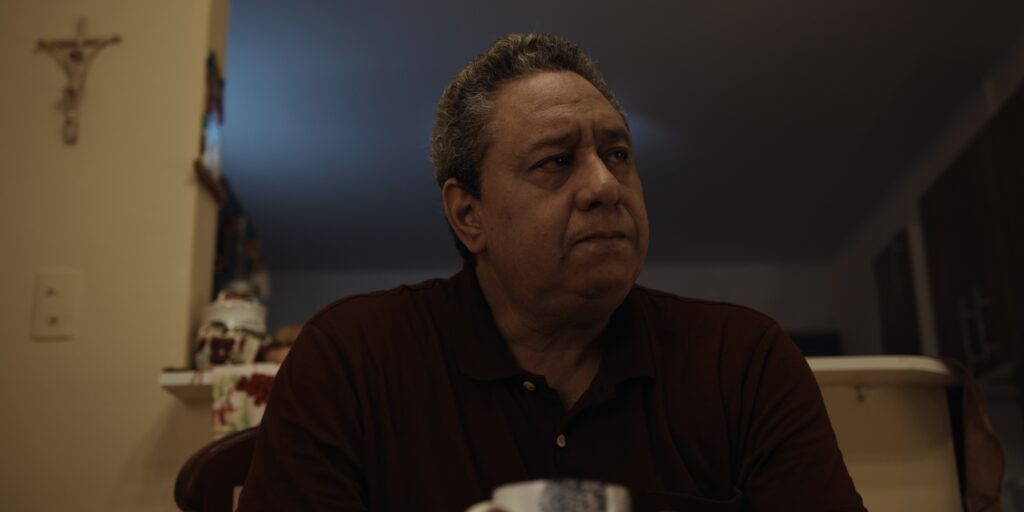
Esa idea influyó mucho en las decisiones visuales de la película. Hay escenas donde decidimos mantener la cámara completamente estática, como en la escena del desayuno. En ese momento prácticamente no hay movimiento: son planos fijos donde el peso recae en los actores y en la tensión emocional que transmiten, mientras la música acompaña ese ambiente.
En contraste, cuando Diego experimenta momentos de libertad o felicidad utilizamos pequeños movimientos de cámara, ligeros zooms o desplazamientos suaves que ayudan a amplificar esa emoción. Y en escenas de gran intensidad, como la confrontación climática, optamos por eliminar la música y apostar por un movimiento de cámara más fuerte y directo, para que el público pueda sentir la energía y la euforia del momento sin interrupciones.
En ese sentido, los movimientos de cámara están pensados de manera muy específica: cuando son suaves, buscan intensificar lo que ocurre dentro de Diego, amplificar esas emociones internas que muchas veces se sienten como una pequeña punzada en el corazón. Cuando son más rápidos o más energéticos, buscan expandir la emoción hacia el exterior.
Incluso la música condicionaba muchas decisiones de montaje. La duración de ciertas piezas musicales influía en cómo cortábamos las escenas y en cómo avanzaba la narrativa. Al final, todo forma parte de una misma construcción dramática: imagen, sonido, ritmo y actuación deben funcionar como una sola coreografía. Y creo que esa manera de pensar la puesta en escena está muy influenciada por el lenguaje del musical.
Cinematic Rhythm: Several members of our jury highlighted the rhythm of your direction, particularly in scenes constructed around movement and music. How did you balance that cinematic energy with the everyday realism of Diego’s life?
A: I believe one of the primary influences in crafting that rhythm comes from my favorite film genre: the musical. That interest allowed me to imbue certain scenes with a more fluid, visual aesthetic—especially in moments where music or singing is present. In those sequences, my aim was for the camera to practically “dance” along with the score, emotionally mirroring the events unfolding on screen.
At the same time, much of this approach stems from my background in theater. In the theater, we are taught that life possesses different rhythms depending on the specific moment one is experiencing. When you are going through moments of happiness, it often feels as though life is rushing by; conversely, when you are navigating difficult or painful situations, time seems to stretch out endlessly.
That concept heavily influenced the visual decisions made throughout the film. There are scenes where we chose to keep the camera completely static—such as in the breakfast scene. In that moment, there is virtually no movement; the shots are fixed, placing the entire weight on the actors and the emotional tension they convey, while the music serves to underscore that atmosphere.
In contrast, when Diego experiences moments of freedom or happiness, we employ subtle camera movements—slight zooms or gentle glides—that help amplify that emotion. And in scenes of high intensity—such as the climactic confrontation—we opted to strip away the music and instead rely on more forceful, direct camera work, allowing the audience to feel the raw energy and euphoria of the moment without any musical mediation.
In this sense, the camera movements were conceived with great specificity: when they are gentle, they seek to intensify what is occurring *within* Diego—to amplify those internal emotions that often feel like a faint pang in the heart. When they are faster or more energetic, they aim to project that emotion outward.
Even the music itself shaped many of the editing decisions. The duration of certain musical pieces influenced how we cut the scenes and how the narrative progressed. Ultimately, everything forms part of a single dramatic construction: image, sound, rhythm, and performance must function as a single choreography. And I believe that this way of conceiving the staging is heavily influenced by the language of the musical.
La duración “Vanguard”: Con casi cuarenta minutos de duración, la película supera deliberadamente el estándar tradicional del cortometraje. ¿Por qué era importante que esta historia tuviera ese espacio adicional para desarrollarse?
R: Creo que la duración nace de una necesidad muy simple: no cortar los sentimientos. Hay emociones que toman tiempo. Hay momentos que tienen un ritmo lento, y si los cortas demasiado rápido, el espectador no llega a experimentarlos realmente.
Vengo del teatro, y en teatro entendemos muy bien que los sentimientos tienen ritmo. A veces ese ritmo es rápido, como una discusión o un momento de alegría, y otras veces es lento, como la incomodidad, la tensión o la tristeza.
De hecho, la película originalmente tenía cerca de sesenta minutos. Eliminamos varias escenas porque ya no eran necesarias para la historia, pero las que quedaron necesitaban ese tiempo para respirar.
Para mí era importante ser fiel a los sentimientos de los personajes. Si una escena necesitaba quedarse unos segundos más para que el público sintiera lo que está ocurriendo, prefería mantenerla así.
The “Vanguard” Runtime: Clocking in at nearly forty minutes, the film deliberately exceeds the traditional standard for a short film. Why was it important for this story to have that extra space to unfold?
A: I believe the runtime stems from a very simple necessity: not to cut short the feelings. There are emotions that take time. There are moments that have a slow rhythm, and if you cut them too quickly, the viewer doesn’t truly get to experience them.
I come from the theater, and in the theater, we understand very well that feelings have a rhythm. Sometimes that rhythm is fast—like an argument or a moment of joy—and other times it is slow, such as with discomfort, tension, or sadness.
In fact, the film originally ran closer to sixty minutes. We cut several scenes because they were no longer necessary to the story, but the ones that remained needed that time to breathe.
For me, it was important to remain true to the characters’ feelings. If a scene needed to linger for a few extra seconds so that the audience could feel what was happening, I preferred to keep it that way.
Diálogo cultural: No Somos Iguales está profundamente arraigada en las realidades sociales y religiosas de Panamá. ¿Qué conversaciones esperas que la película pueda generar dentro de tu país?
R: Espero que la película abra un espacio de reflexión sobre cómo se toman ciertas decisiones en Panamá, especialmente cuando se trata de derechos de la comunidad LGBT. Muchas veces, las decisiones políticas en nuestro país están fuertemente influenciadas por posturas religiosas, a pesar de que no toda la población comparte las mismas creencias. Panamá es una sociedad diversa, con distintas formas de pensar, creer y vivir, y esa diversidad debería reflejarse también en las decisiones que afectan la vida de las personas.
Además, quería representar algo muy importante: romper el chip de que la comunidad LGBT es homogénea. Es decir, que todas las lesbianas, todos los gays o las personas trans son iguales, que buscan lo mismo o se comportan de la misma forma. Quería resaltar cada una de estas aristas: mostrar que, si tenemos tres personajes gays, cada uno es completamente distinto, tanto en su personalidad como en su forma de ver la vida, de amar, de expresarse, ya sea a través de su vestimenta o de su manera de ser. Esta era una de las cosas principales cuando empezamos a moldear No Somos Iguales.
Cultural Dialogue: *No Somos Iguales* is deeply rooted in the social and religious realities of Panama. What conversations do you hope the film might spark within your country?
A: I hope the film opens up a space for reflection regarding how certain decisions are made in Panama—especially when it comes to the rights of the LGBT community. Political decisions in our country are often heavily influenced by religious stances, despite the fact that not the entire population shares the same beliefs. Panama is a diverse society, with distinct ways of thinking, believing, and living; that diversity should also be reflected in the decisions that affect people’s lives.
Furthermore, I wanted to represent something very important: breaking the mindset that the LGBT community is monolithic—that is, the notion that all lesbians, all gay men, or all trans people are the same; that they seek the same things or behave in the same way. I wanted to highlight each of these facets: to show that, even if we have three gay characters, each one is completely distinct—both in their personality and in their outlook on life, their way of loving, and their means of self-expression, whether through their clothing or their general demeanor. This was one of our primary objectives when we first began shaping *No Somos Iguales*.
Evitar los clichés habituales: Muchas narrativas cinematográficas sobre personajes LGBTQ+ se centran principalmente en la sexualidad. Tu película, en cambio, se enfoca en la identidad, el sentido de pertenencia y la libertad personal. ¿Fue una decisión consciente desde el principio?
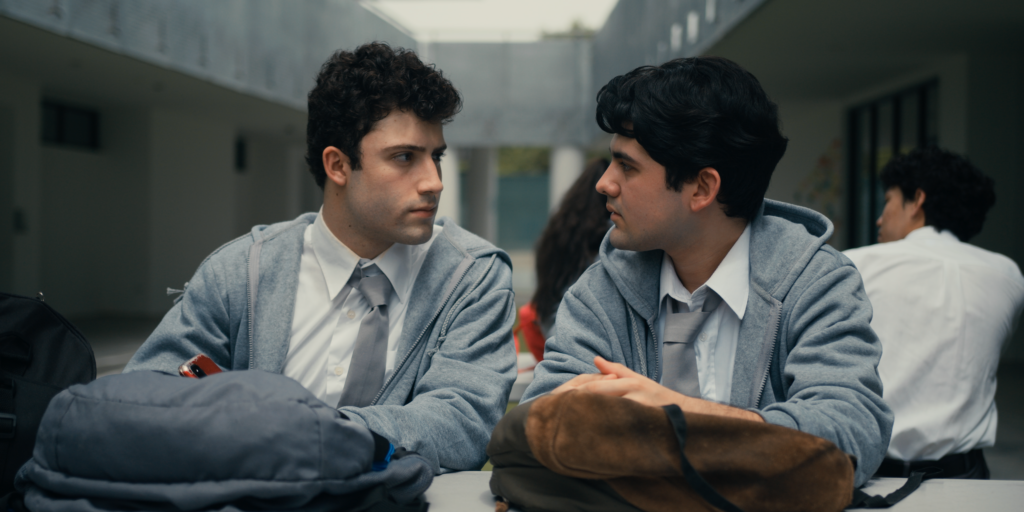
R: Sí, fue una decisión que marcó el rumbo de la historia desde el inicio. Como este es un cortometraje que buscaba romper paradigmas, no quería basarme en la idea común que tiene la sociedad. Es decir, cuando se menciona cualquier persona o cualquier orientación de las siglas LGBTQ, la primera connotación que se piensa es la sexual. Pero, para mí, no debía ser así. La sexualización de los personajes que creamos fue descartada por completo. Si bien Diego es gay, quisimos explorar su identidad desde una perspectiva más profunda. Todo ese proceso de pensamiento, de transformación interna, era lo que queríamos retratar: entender que no es uno quien está mal, sino que vivimos en un mundo donde todo el tiempo se busca lo común, y lo no común queda fuera. Desde los primeros borradores, cuando mostraba la amistad entre Chris y Diego, muchas personas me decían: “¿Por qué no los haces pareja?” Pero nunca fue la idea. La idea era, uno, no sexualizar al personaje, y dos, mostrar que una relación homosexual con un heterosexual, puede ser completamente llevadera sin que esto tenga que recaer en una connotación sexual o amorosa.
Avoiding common clichés: Many cinematic narratives about LGBTQ+ characters focus primarily on sexuality. Your film, however, centers on identity, a sense of belonging, and personal freedom. Was this a conscious decision from the very beginning?
A: Yes, it was a decision that charted the course of the story right from the start. Since this is a short film intended to challenge paradigms, I didn’t want to rely on society’s common preconceptions. That is to say, whenever a person or an orientation falling under the LGBTQ acronym is mentioned, the first association that comes to mind is sexual. But, to me, it shouldn’t be that way. The sexualization of the characters we created was completely ruled out. Although Diego is gay, we wanted to explore his identity from a deeper perspective. That entire process of introspection—of internal transformation—was what we wanted to portray: the realization that it isn’t *you* who is “wrong,” but rather that we live in a world where the norm is constantly sought after, and anything outside of that norm gets left out. From the very first drafts—when I was depicting the friendship between Chris and Diego—many people would ask me: “Why don’t you make them a couple?” But that was never the idea. The goal was, firstly, not to sexualize the character, and secondly, to demonstrate that a relationship between a gay person and a heterosexual person can be completely viable without necessarily having to take on a sexual or romantic connotation.
Mirando hacia atrás: Ahora que la película ha comenzado a llegar a audiencias internacionales, ¿qué momento del resultado final representa mejor los riesgos artísticos que asumiste como director?
R: Creo que uno de los principales riesgos fue mantener la duración de cuarenta minutos. No es un estándar habitual en festivales, ya que ocupa mucho espacio en la programación. Siendo mi primera obra, sin un nombre consolidado, tomar esa decisión fue arriesgado. No suelen hacerse producciones con esa duración. Pero la historia misma me pidió ese tiempo, y decidí escucharla.
Otro riesgo importante fue lograr que el guion resonara directamente en Panamá. Vivir en una sociedad tan conservadora y mostrar un aspecto no tan positivo del país fue un gran riesgo. Si bien la crítica puede funcionar en un contexto internacional, dentro del país puede ser más difícil de digerir.
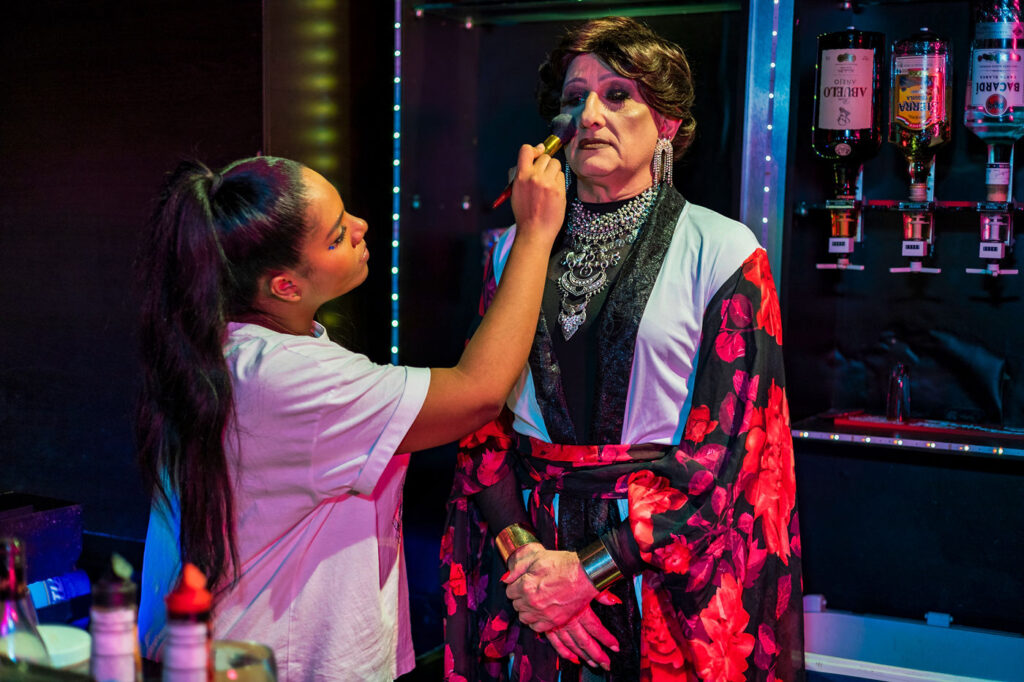
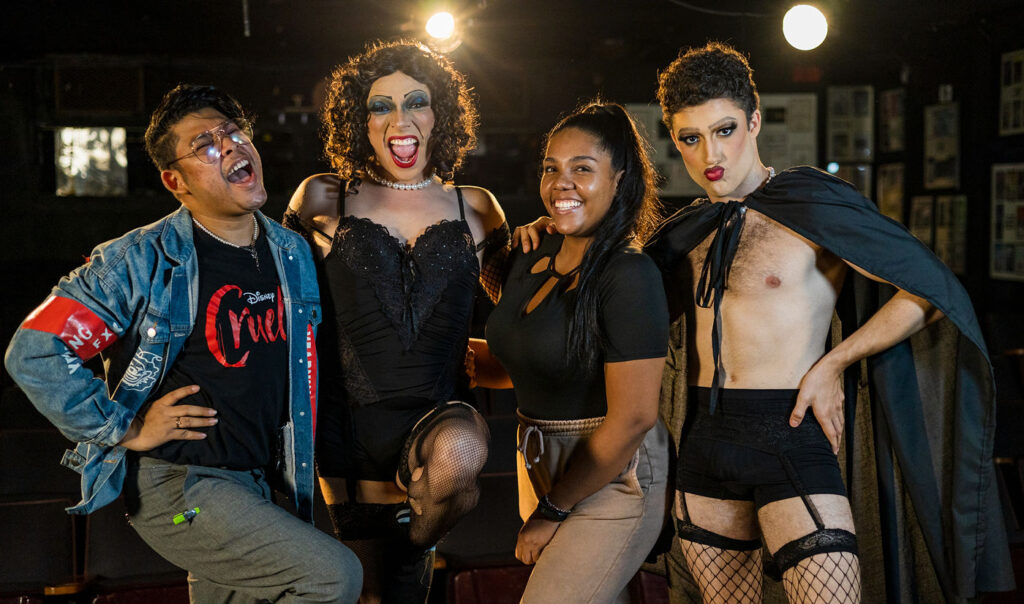
Además, hay dos escenas que representan los mayores riesgos artísticos. Una es la escena de la disco. El actor que interpreta a Andrea/André, se comprometió tanto con el papel, que al entrar en el personaje, tuvo serios desafíos físicos. Él, que ya es un hombre mayor, no podía siquiera tomar pausas, y eso fue un riesgo enorme. Pero lo hizo a la perfección, manteniendo su personaje, algo crucial, ya que es quien resuena más con Diego, le da una nueva perspectiva. Y otro riesgo fue la escena de los golpes. Esa escena debía salir bien en las primeras tomas, porque a medida que avanzábamos, el nerviosismo de los actores, esa energía inicial, podía diluirse. Así que creo que esas dos escenas fueron los mayores riesgos artísticos, mientras que los otros riesgos eran más sociales.
Looking back: Now that the film has begun reaching international audiences, which moment in the final cut best exemplifies the artistic risks you took as a director?
A: I think one of the main risks was sticking to a runtime of forty minutes. It’s not a standard format at festivals, as it takes up a significant amount of space in the programming schedule. As this was my debut work—and without an established name to my credit—making that decision was risky. Productions of that specific length aren’t typically undertaken. But the story itself demanded that amount of time, and I decided to heed its call.
Another significant risk was ensuring the script resonated directly with audiences in Panama. Living in such a conservative society, and choosing to portray a less-than-flattering aspect of the country, was a major gamble. While social critique may work well in an international context, it can be much harder to swallow when presented within one’s own country.
Furthermore, there are two specific scenes that represent the greatest artistic risks. One is the nightclub scene. The actor playing Andrea/André committed so fully to the role that, once he fully inhabited the character, he faced serious physical challenges. Being an older man, he couldn’t even take breaks—which posed an enormous risk. Yet he executed it flawlessly, maintaining his character throughout—something crucial, as his character is the one who resonates most deeply with Diego, offering him a fresh perspective. The other risk involved the fight scene. That scene absolutely had to work in the very first few takes; as we progressed through subsequent takes, the actors’ nerves—that raw, initial energy—ran the risk of dissipating. So, I believe those two scenes represented the greatest artistic risks, whereas the other risks were of a more social nature.
Para Antonio Rosello (Diego)
El peso del personaje Diego se encuentra en una intersección compleja entre la masculinidad asociada al deporte y la expresión artística. Cuando leíste el guion por primera vez, ¿sentiste alguna presión o duda al asumir un papel tan transformador?
R: Si soy completamente honesto, sí sentí cierta aprensión cuando leí el guion por primera vez. Sabía que la historia tocaba temas que podían considerarse controvertidos en un país como Panamá, que es bastante conservador y religioso, y donde el fútbol está profundamente arraigado en la cultura. A nivel mundial, rara vez vemos jugadores de fútbol profesional que sean abiertamente LGBTQ.
Sin embargo, el personaje estaba tan bien escrito y tenía una profundidad emocional tan grande que supe que la historia conectaría con audiencias mucho más allá de la comunidad LGBTQ. Habla sobre identidad, sobre las expectativas familiares y sobre el valor de ser uno mismo. Por eso sentí una responsabilidad de asumir el papel e interpretar a Diego con la mayor honestidad y vulnerabilidad posible.
For Antonio Roselló (Diego)
The weight of the character Diego lies at a complex intersection between the masculinity associated with sports and artistic expression. When you first read the script, did you feel any pressure or hesitation about taking on such a transformative role?
A: To be completely honest, yes, I did feel a certain apprehension when I first read the script. I knew that the story touched upon themes that could be considered controversial in a country like Panama—which is quite conservative and religious, and where soccer is deeply ingrained in the culture. On a global level, we rarely see professional soccer players who are openly LGBTQ.
However, the character was so well-written and possessed such great emotional depth that I knew the story would resonate with audiences far beyond the LGBTQ community. It speaks to identity, family expectations, and the courage to be oneself. That is why I felt a responsibility to take on the role and portray Diego with the utmost honesty and vulnerability.
La narrativa silenciosa: Diego comunica mucho más a través de su postura y lenguaje corporal que mediante el diálogo. ¿Cómo trabajaste con Jesús para construir ese lenguaje físico que transmite su conflicto interno?
R: Me honra mucho que hayas notado ese elemento del personaje, porque fue algo muy intencional. Me inspiré en películas como Moonlight, donde el protagonista existe dentro de un entorno altamente masculino mientras también lucha con su propia identidad.
También investigué la psicología de alguien como Diego: un joven que perdió a su madre a una edad temprana y que vive bajo la presión de un padre controlador que no puede aceptar su sexualidad. Por esa razón, quería que Diego se sintiera reservado y algo incómodo al comunicarse verbalmente, casi como si estuviera conteniendo constantemente algo dentro de sí.
Al mismo tiempo, quería que encontrara libertad en ciertos espacios. En el campo de fútbol puede liberar esa tensión y simplemente existir en el momento, y cuando ensaya su personaje para la obra escolar también encuentra una especie de liberación. Esos entornos contrastantes ayudaron a construir su lenguaje corporal a lo largo de la película.
The Silent Narrative: Diego conveys much more through his posture and body language than through dialogue. How did you work with Jesús to build that physical language that conveys his internal conflict?
A: I am deeply honored that you noticed that element of the character, because it was something very intentional. I drew inspiration from films like *Moonlight*, where the protagonist exists within a highly masculine environment while simultaneously grappling with his own identity.
I also researched the psychology of someone like Diego—a young man who lost his mother at an early age and lives under the pressure of a controlling father who cannot accept his sexuality. For that reason, I wanted Diego to feel reserved and somewhat uncomfortable when communicating verbally—almost as if he were constantly holding something back inside himself.
At the same time, I wanted him to find freedom in certain spaces. On the soccer field, he can release that tension and simply exist in the moment; and when he rehearses his role for the school play, he also finds a sense of liberation. These contrasting environments helped shape his body language throughout the film.
Para Antonio Rosello y Mike Pérez (Sixto) 13. La arquitectura de la familia La relación entre Diego y su padre transmite un amor genuino, pero también una profunda incomprensión. ¿Cómo construyeron esa dinámica padre-hijo durante los ensayos?
DIEGO – Antonio Rosello
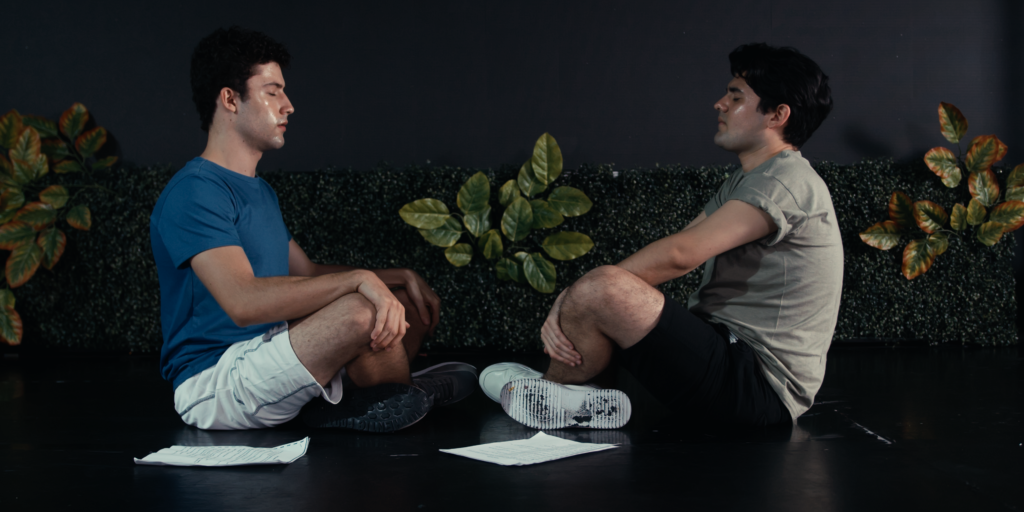
R: Tuvimos el privilegio de ensayar con el director Jesús durante dos semanas antes de filmar la película, y una gran parte de ese tiempo estuvo dedicada a desarrollar la relación entre Mike y yo.
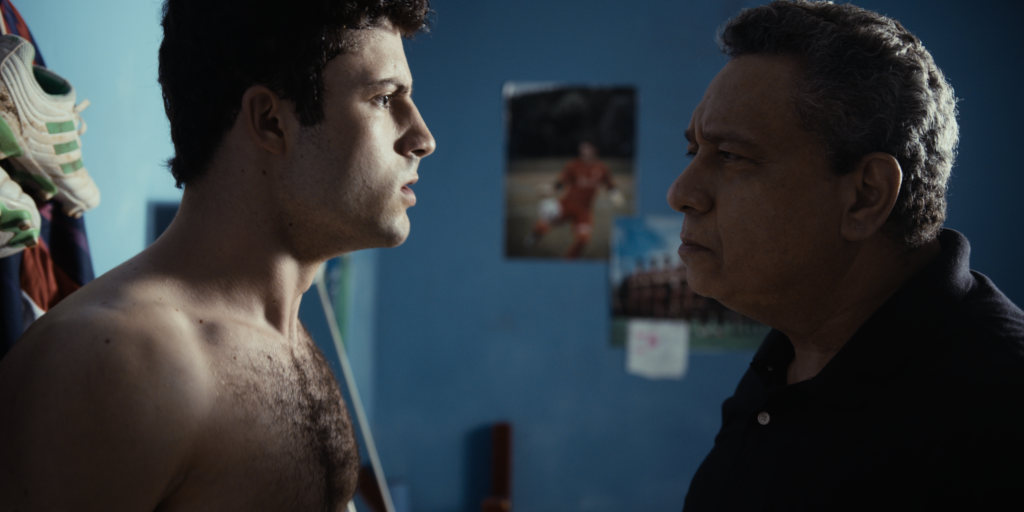
Pasamos muchas horas explorando la historia emocional entre estos personajes y, en particular, preparando la escena climática donde finalmente caen las máscaras emocionales de ambos. Mike y yo trabajamos en una historia de fondo compartida para nuestros personajes y abordamos cada escena con la idea de que, a pesar de su conflicto, tanto el padre como el hijo todavía se aman profundamente.
Otro elemento importante que exploramos fue la ausencia de la madre de Diego. Ella nunca es mencionada directamente en la película, pero imaginamos que su pérdida había afectado profundamente a ambos personajes y que también contribuyó a la distancia emocional entre ellos.
SIXTO – Mike Perez
R: Lo adopté como hijo propio desde el momento que nos presentaron, conversamos mucho de nuestras vidas reales y eso nos ayudó a llevar a la pantalla la naturalidad de la relación. También utilicé las anécdotas que me compartieron en confianza mis colegas homosexuales de los cuales he escuchado sus vivencias y rechazos que atraviesan en sus vidas cotidianas, para poder canalizar lo que Sixto refleja en pantalla.
For Antonio Rosello and Mike Pérez (Sixto) 13. The Architecture of the Family: The relationship between Diego and his father conveys a genuine love, yet also a profound lack of understanding. How did you build that father-son dynamic during rehearsals?
DIEGO – Antonio Rosello
A: We had the privilege of rehearsing with our director, Jesús, for two weeks before filming the movie, and a large portion of that time was dedicated to developing the relationship between Mike and me.
We spent many hours exploring the emotional history between these characters—and, in particular, preparing for the climactic scene where the emotional masks worn by both men finally drop away. Mike and I worked on a shared backstory for our characters and approached every scene with the understanding that, despite their conflict, both father and son still love each other deeply.
Another important element we explored was the absence of Diego’s mother. She is never mentioned directly in the film, but we imagined that her loss had profoundly affected both characters and had also contributed to the emotional distance between them.
SIXTO – Mike Perez
A: I embraced him as my own son from the very moment we were introduced; we talked extensively about our real lives, and that helped us bring a sense of naturalness to our on-screen relationship. I also drew upon anecdotes shared with me in confidence by my gay colleagues—stories in which I’ve heard firsthand about the experiences and instances of rejection they face in their daily lives—in order to channel the emotions that Sixto portrays on screen.
El momento de confrontación Sin revelar demasiado para quienes aún no han visto la película, hay un momento en el que la doble vida de Diego comienza a desmoronarse. ¿Cuál fue el mayor desafío al filmar esa escena emocional?
DIEGO – Antonio Rosello
R: La parte más desafiante fue entrar en el espacio emocional que requería esa escena. La coreografía física de la confrontación ya había sido cuidadosamente preparada durante las dos semanas de ensayos con Mike y el director.
Pero a nivel emocional sabía que la escena exigía una vulnerabilidad total. El día del rodaje pasé aproximadamente una hora a solas preparándome y permitiéndome alcanzar ese estado emocional, para que cuando filmáramos los primeros planos el quiebre se sintiera real y auténtico.
Fue una experiencia agotadora. Recuerdo que ese día llegué a casa sintiéndome extremadamente drenado, pero también muy orgulloso del trabajo que habíamos logrado. Además, me sentí profundamente agradecido por la oportunidad de interpretar a un personaje tan complejo y de poder compartir ese recorrido emocional con el público.
SIXTO – Mike Perez
R: Uno de los mayores retos durante el rodaje fue trabajar con escenas físicamente exigentes sin poner en riesgo a mi compañero de escena, ya que algunos de los movimientos eran bastante intensos. Al mismo tiempo, para mí era muy importante evitar caer en el cliché del padre homofóbico que suele aparecer con frecuencia en este tipo de narrativas.
Mi intención siempre fue mantener la complejidad emocional del personaje del padre. Incluso en medio del conflicto, quería que el público pudiera percibir que el amor hacia su hijo sigue presente. Por eso, uno de los momentos que mejor representa ese riesgo creativo es el final de la película: a pesar de la decisión de Diego y de que él atraviesa la puerta, la idea es que el vínculo entre padre e hijo no desaparece. El conflicto existe, pero el amor también permanece.
The Moment of Confrontation: Without giving too much away for those who haven’t seen the film yet, there is a moment where Diego’s double life begins to crumble. What was the biggest challenge in filming that emotional scene?
DIEGO — Antonio Rosello
A: The most challenging part was entering the emotional space that the scene required. The physical choreography of the confrontation had already been carefully prepared during the two weeks of rehearsals with Mike and the director.
But on an emotional level, I knew the scene demanded total vulnerability. On the day of the shoot, I spent about an hour alone, preparing myself and allowing myself to reach that emotional state so that—when we filmed the close-ups—the emotional breakdown would feel real and authentic.
It was an exhausting experience. I remember coming home that day feeling extremely drained, but also very proud of the work we had accomplished. Furthermore, I felt deeply grateful for the opportunity to portray such a complex character and to be able to share that emotional journey with the audience.
SIXTO — Mike Perez
A: One of the biggest challenges during the shoot was performing physically demanding scenes without putting my scene partner at risk, since some of the movements were quite intense. At the same time, it was very important for me to avoid falling into the cliché of the homophobic father—a trope that appears frequently in these types of narratives.
My intention was always to preserve the emotional complexity of the father figure. Even amidst the conflict, I wanted the audience to be able to perceive that his love for his son remains present. That is why one of the moments that best embodies this creative risk is the film’s ending: despite Diego’s decision—and the fact that he walks out the door—the idea is that the bond between father and son does not vanish. The conflict exists, but the love remains as well.
Cierre
Closing
Mirando hacia el futuro: Después del proceso de llevar We Are Not the Same a la pantalla, ¿qué tipo de historias te interesa explorar en tus próximos proyectos?
Jesus
R: Hay dos temas muy controversiales que me gustaría abordar, y son muy opuestos. El primero tiene que ver con la vida, con el nacimiento. Es interesante cómo, cuando llega un nuevo ser a la familia, todos nos alegramos, pero a medida que ese ser crece, esa alegría puede transformarse en un sufrimiento. Quiero explorar qué pasaría si, siendo una persona muy religiosa, supieras desde el nacimiento la orientación de tu hijo. Quiero mantener ese tono de lucha entre la religión y la homosexualidad, pero desde la mirada de una madre que debe tomar una decisión, tratando de conocer quién es su hijo y viendo si ese nacimiento puede traer luz a su futuro. Así que quiero explorar cómo un nacimiento puede transformarse en un sufrimiento, y qué decisiones tomaríamos si conociéramos todo el futuro.
Por otro lado, el otro tema que estoy investigando es la muerte. Como ves, uno habla del inicio y el otro del final. En la muerte, quiero explorar el duelo, las distintas formas en que una persona puede dejar ir a un ser querido. No siempre es con llanto, no siempre es con un cambio de personalidad. A veces no logramos entender que cada persona vive el duelo a su manera, según su psicología, quién es, o incluso quién era la persona que murió. Quiero mostrar esa diversidad en las formas de lidiar con la pérdida, más allá de lo que solemos esperar.
Antonio
R: Después de filmar We Are Not the Same, tuve la oportunidad de mudarme a Los Ángeles para continuar desarrollando mi carrera como actor. Interpretar a Diego me mostró lo poderosos que pueden ser los personajes emocionalmente complejos y cómo pueden conectar profundamente con el público.
De cara al futuro, me interesa especialmente explorar historias que aborden la identidad, las dinámicas familiares y los conflictos profundamente humanos. Me atraen los personajes que me retan emocionalmente y me permiten profundizar en la complejidad de la experiencia humana, especialmente dentro del cine internacional.
Looking Ahead: After the process of bringing *We Are Not the Same* to the screen, what kind of stories are you interested in exploring in your upcoming projects?
Jesus
A: There are two very controversial themes I’d like to tackle—and they are polar opposites. The first has to do with life, with birth. It’s interesting how, when a new life enters the family, we all rejoice; yet, as that being grows, that joy can transform into suffering. I want to explore what would happen if—as a deeply religious person—you knew your child’s sexual orientation right from birth. I want to maintain that thematic tension between religion and homosexuality, but viewed through the eyes of a mother who must make a difficult choice—striving to truly understand who her son is, and determining whether his birth might ultimately bring light to her future. So, I want to explore how a birth can evolve into a source of suffering, and what decisions we might make if we knew the entirety of the future.
On the other hand, the other theme I’m currently researching is death. As you can see, one speaks to the beginning, and the other to the end. Regarding death, I want to explore the grieving process—the various ways in which a person might let go of a loved one. It doesn’t always manifest as weeping; it doesn’t always involve a shift in personality. Sometimes we fail to grasp that everyone experiences grief in their own unique way—shaped by their individual psychology, their own identity, or even the nature of the person they lost. I want to showcase that diversity in how people cope with loss, moving beyond the reactions we typically expect.
Antonio
A: After filming *We Are Not the Same*, I had the opportunity to move to Los Angeles to continue building my career as an actor. Playing the role of Diego showed me just how powerful emotionally complex characters can be, and how deeply they can resonate with an audience.
Looking ahead, I am particularly interested in exploring stories that delve into themes of identity, family dynamics, and deeply human conflicts. I am drawn to characters that challenge me emotionally and allow me to plumb the depths of the human experience—especially within the realm of international cinema.
Mantener el contacto
Para quienes deseen seguir tu trabajo, ¿dónde pueden encontrarte en línea o mantenerse al tanto de tus próximos proyectos?
JESUS
R: Bueno, no soy una persona muy activa en muchas redes, la verdad, pero debo admitir que la plataforma donde más estoy presente es Instagram, como @itsjjcastle. Ahí comparto las actualizaciones de mis proyectos, ensayos de obra, próximos lanzamientos, así que quien quiera seguir mi trabajo, ahí es donde me pueden encontrar.
ANTONIO
R: Gracias por el espacio y por las preguntas tan reflexivas. Quienes deseen seguir mi trayectoria pueden hacerlo a través de Instagram, donde comparto actualizaciones sobre mi carrera actoral y mi vida como actor. Instagram: @aa_anton
Staying in Touch
For those who would like to follow your work, where can they find you online or keep up with your upcoming projects?
JESUS
A: Well, to be honest, I’m not a very active person on many social media platforms; however, I must admit that the platform where I have the strongest presence is Instagram—you can find me there as @itsjjcastle. That’s where I share updates on my projects, rehearsal progress, and upcoming releases, so anyone who wants to follow my work can find me there.
ANTONIO
A: Thank you for the opportunity and for such thoughtful questions. Those who wish to follow my journey can do so via Instagram, where I share updates regarding my acting career and my life as an actor. Instagram: @aa_anton