' ' '
Atlantis Artist Spotlight
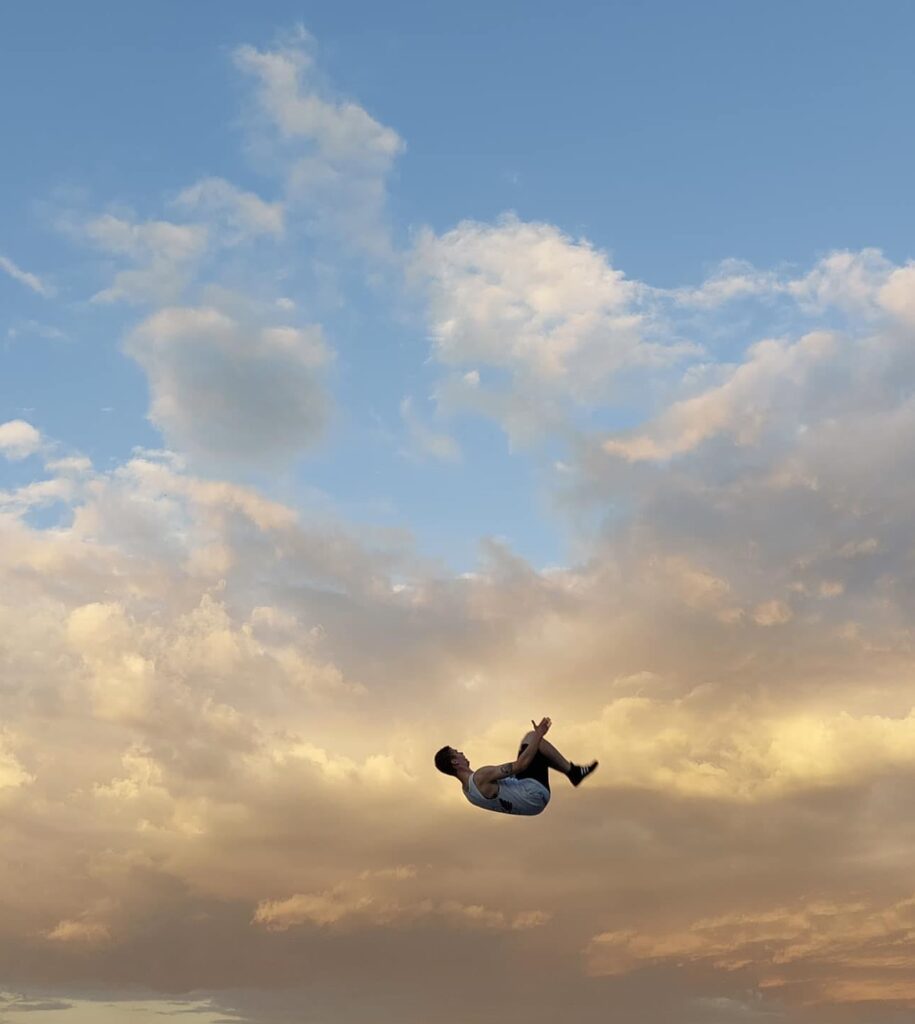
UNSPOKEN / NIEWYPOWIEDZIANE
Dir. Maciej Adamek
Winner of Best Director & Best Documentary Feature 2026
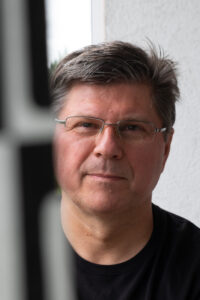
Thank you for being here.
For this Artist Spotlight, we’re sitting down with Maciej Adamek, director of Unspoken (Niewypowiedziane) — a documentary that observes silence not as absence, but as lived experience.
Rather than approaching this as a formal interview, we want this conversation to feel closer to the way Unspoken itself unfolds: attentive, patient, and grounded in the present moment. What follows is Maciej’s own reflection on his path to documentary filmmaking, his relationship to restraint and observation, and how Unspoken slowly found its form.
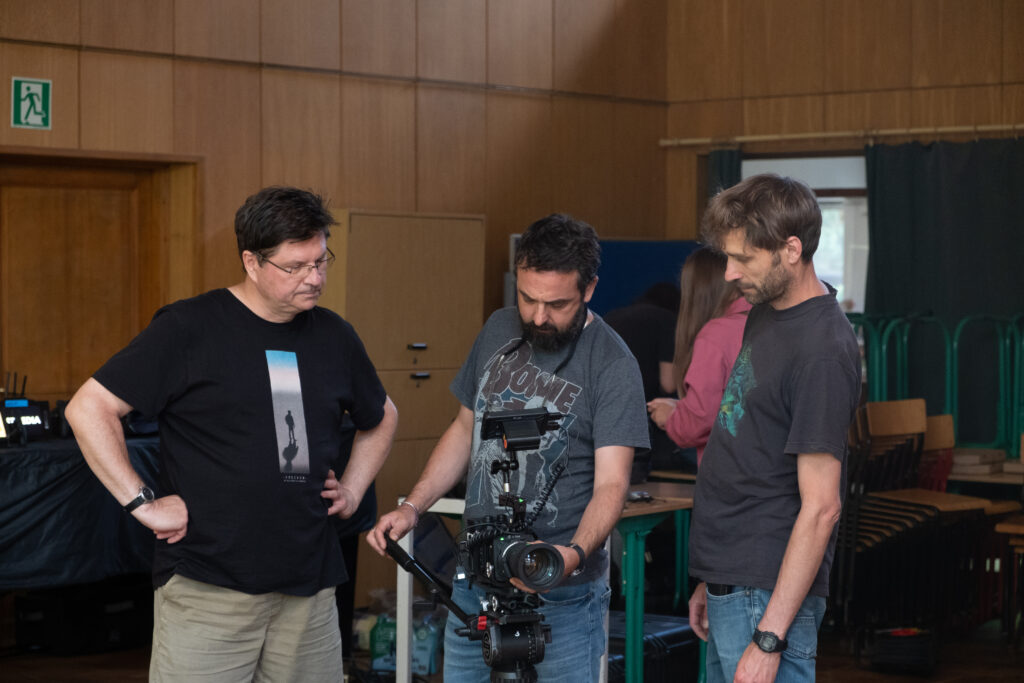
For those encountering your work for the first time, how would you describe yourself as a storyteller?
When I applied to the Łódź Film School, I wasn’t interested in documentaries at all. I wanted to make fiction films. Documentaries felt dull to me at the time. During my studies, however, I discovered that it could be deeply engaging, and that the human face can be just as compelling as the most gripping plot.
At school, it also became clear that I was making stronger short documentaries than fiction films. Even so, I was still very drawn to narrative cinema. When I graduated in the late 1990s, it was extremely difficult to finance fiction films in Poland, so I began making documentaries. My first film, And I Will Not Leave You Until Death, achieved significant success and was nominated for the European Film Award. Later came other documentaries, including A Life to Live, which won awards at festivals such as Palm Springs and San Francisco.
Over time, I realized that documentary filmmaking came naturally to me. What interests me most is observing people in the present moment. I’m drawn to films that follow characters as events unfold, allowing the audience to experience life alongside them. I like watching my subjects in action and letting reality shape the narrative.
Jak wyglądała Twoja droga do filmu dokumentalnego? Czy był moment lub projekt, który szczególnie ukształtował Twoje podejście jako reżysera?
Gdy zdawałem do Szkoły Filmowej w Łodzi, w ogóle nie interesował mnie film dokumentalny. Chciałem robić filmy fabularne. Dokument wydawał mi się nudny. Dopiero w czasie studiów odkryłem, że może być interesujący, a twarz ludzka równie wciągająca jak najlepsza fabuła.
W szkole okazało się też, że robię lepsze krótkie filmy dokumentalne niż fabularne. Po ukończeniu studiów pod koniec lat 90. bardzo trudno było w Polsce zdobyć pieniądze na fabuły, więc zacząłem robić dokumenty. Już mój pierwszy film, I nie opuszczę cię aż do śmierci, odniósł duży sukces i został nominowany do Europejskiej Nagrody Filmowej. Potem powstały kolejne filmy, w tym Życie przed Tobą, nagradzane na festiwalach w Palm Springs i San Francisco.
Zauważyłem, że dokument przychodzi mi z łatwością. Najbardziej interesuje mnie obserwowanie bohaterów tu i teraz — śledzenie ich działań i pozwolenie, by rzeczywistość sama budowała opowieść.
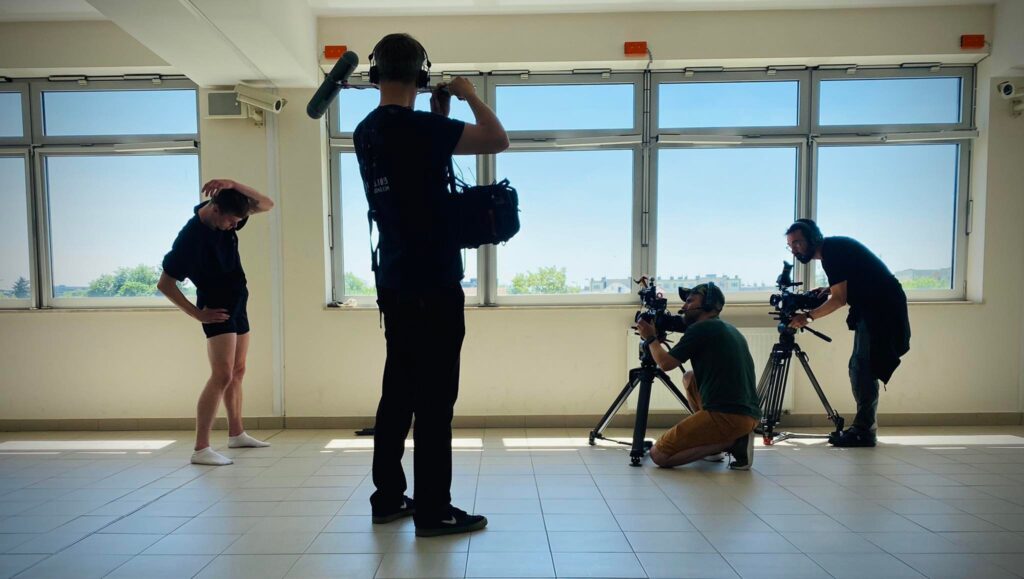
What themes or questions tend to recur in your work?
I’m drawn to people facing difficult circumstances and trying to find their way through them. I’m interested in stories about inner life and emotional resilience. I often return to characters with heightened sensitivity and emotional depth, and only recently have I fully understood why — it’s a sensibility I feel close to myself.
Jakie tematy lub pytania powracają w Twojej pracy — nawet jeśli nie zawsze są w pełni uświadomione?
Interesują mnie ludzie, którzy przeżywają trudności i muszą sobie z nimi radzić. Chcę opowiadać o sprawach ważnych i o życiu wewnętrznym bohaterów. Często wracam do postaci o dużej wrażliwości emocjonalnej, bo są mi po prostu bliskie.
What draws you to documentary as a form?
Documentary allows me to enter the lives of others and observe them closely. In that sense, I act as a mediator between my subjects and the audience. I can show people whose lives are often overlooked, or misunderstood in simplified ways. This can encourage reflection and sometimes even a reassessment of one’s assumptions.
What fascinates me is the authenticity of human behavior. In fiction, scenes must be carefully constructed; in documentary, life sometimes offers moments more surprising and truthful than anything I could design. Real people are often far more complex than fictional characters.
Form is also important to me. Images should carry intensity and intention — not just function as raw documentation.
Co najbardziej pociąga Cię w formie dokumentalnej w porównaniu z innymi formami opowiadania historii?
Interesuje mnie świat innych ludzi, a dokument pozwala mi uczestniczyć w ich życiu i przyglądać się im z bliska. Jestem pośrednikiem między bohaterami a widzami. Mogę pokazać życie osób, które często są pomijane lub upraszczane w odbiorze.
Fascynuje mnie prawda ludzkich zachowań i ich nieoczywistość. Prawdziwi ludzie potrafią zaskakiwać bardziej niż bohaterowie filmów fabularnych. Forma filmu jest dla mnie bardzo ważna — obraz powinien mieć siłę i intensywność, a nie być wyłącznie rejestracją zdarzeń.
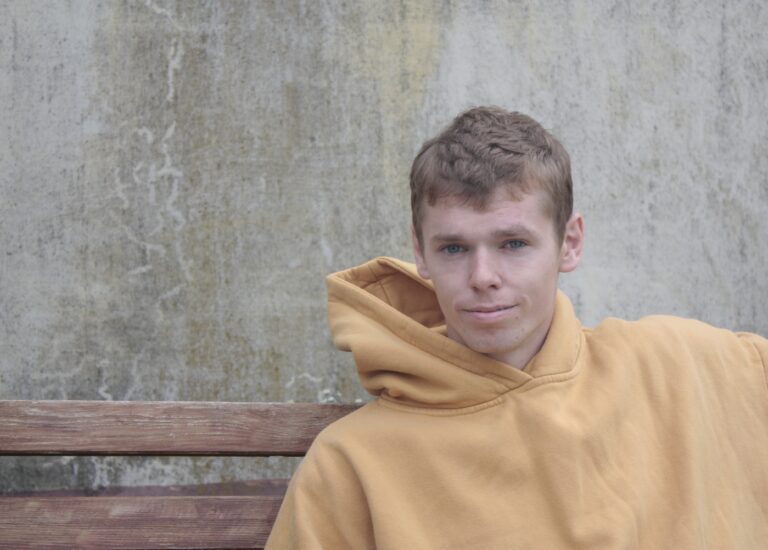
When did Unspoken first begin to take shape?
I first encountered the subject of stuttering while listening to a radio report about a young man trying to overcome it. I realized no documentary on the subject had been made in Poland. While searching for a protagonist on social media, I came across Mateusz, who practiced acrobatics. The contrast immediately struck me — psychology and physical movement, inner struggle and athletic control.
That combination gave the film its structure. Mateusz was preparing for competitions, which naturally became the film’s narrative spine.
Jak po raz pierwszy zetknąłeś się z tematem Unspoken?
Pierwszy raz zetknąłem się z tematem jąkania, słuchając reportażu radiowego. Szukając bohatera, natknąłem się na Mateusza, który uprawiał akrobatykę. To połączenie psychologii i sportu od razu wydało mi się idealne. Z czasem zawody, do których się przygotowywał, stały się osią filmu.
At what point did silence and the unsaid become central to the film?
Very early on. After just a few conversations with Mateusz, I understood that silence would be essential to the film’s language. The title emerged naturally from his experience, and from the themes already present in his life.
Na jakim etapie stało się jasne, że film powinien podążać w tym kierunku?
Tytuł powstał bardzo szybko. Już po kilku rozmowach z Mateuszem wiedziałem, że cisza i niedopowiedzenie będą kluczowe. Ten kierunek naturalnie wynikał z jego historii.
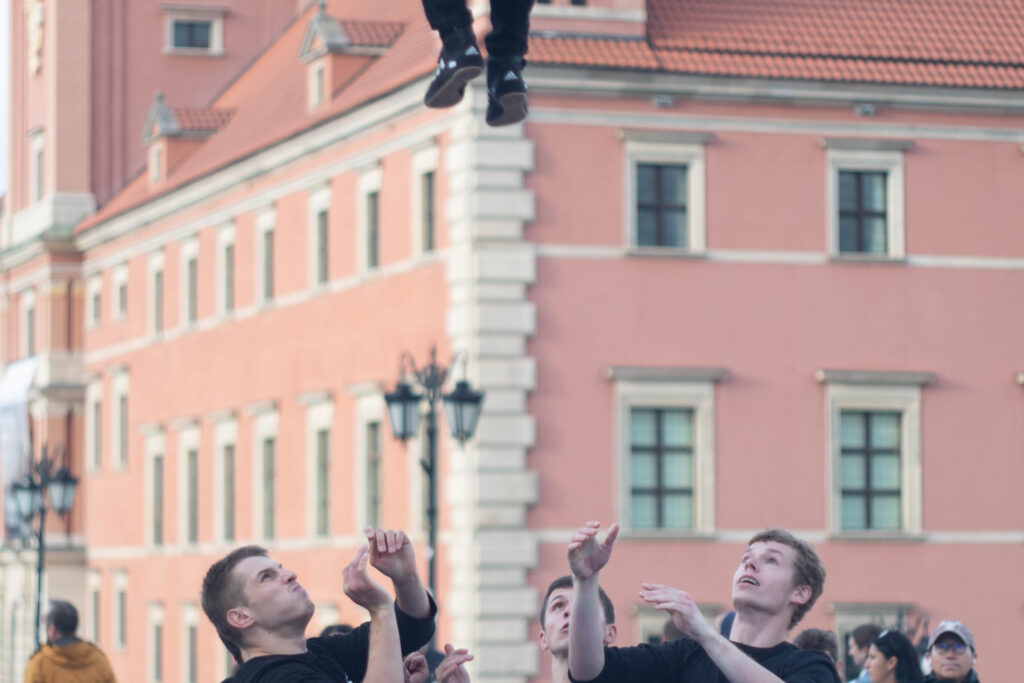
Did anything shift your understanding of the material during production?
Yes. Early conversations with Mateusz — which I recorded to better understand him — made me fully aware of how deeply stuttering affected every aspect of his life. Some of those conversations later became voiceovers in the film. They helped me understand what truly mattered and where my focus should be during filming.
Czy były momenty, które zmieniły Twoje podejście do materiału?
Rozmowy z Mateuszem bardzo pomogły mi zrozumieć, jak dużym problemem jest dla niego jąkanie i jak wpływa na jego życie. To one wskazały mi, na czym powinienem się skupić podczas realizacji filmu.
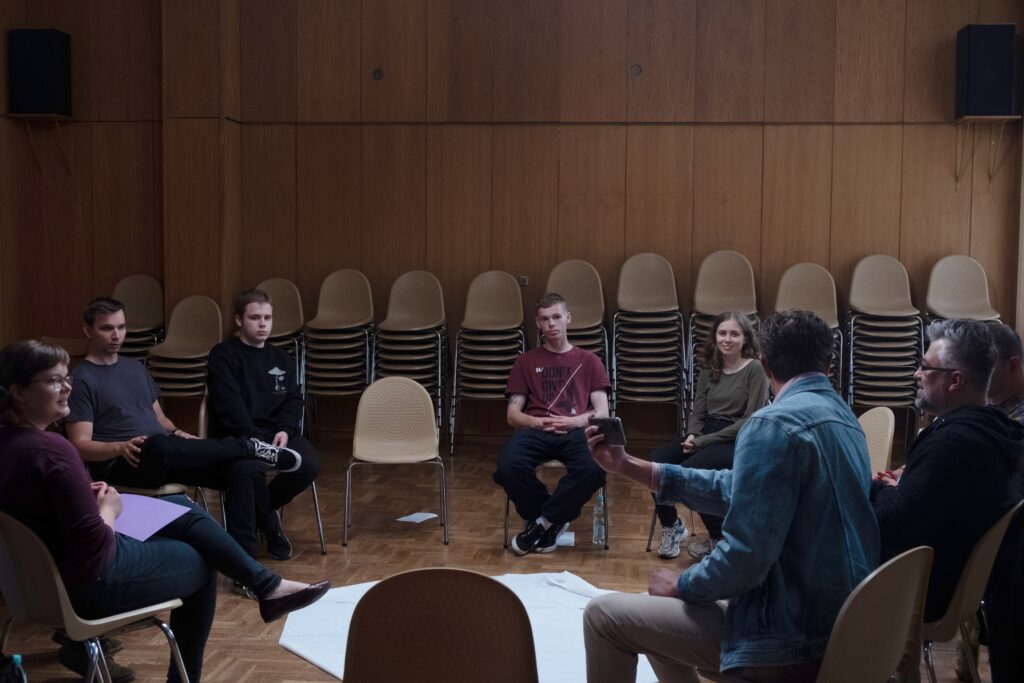
How consciously did you approach restraint and omission?
It’s a complex question, but ultimately it comes down to staying close to the film’s core theme. You can’t remain there constantly, but it’s important not to lose sight of it. Restraint helps maintain focus and coherence.
Jak świadomie podchodziłeś do decyzji o tym, czego nie pokazywać?
To zagadnienie złożone, ale sprowadza się do trzymania się głównego tematu filmu i bycia jak najbliżej niego.
How did directing, cinematography, and editing interact?
I have a clear vision of documentary filmmaking, and these elements naturally intersect in my work. Visual storytelling is extremely important to me — documentary is not just observation, but also creation. I was fortunate to collaborate with excellent professionals who understood that approach.
Jak wyglądała relacja między reżyserią, zdjęciami i montażem?
Mam sprecyzowaną wizję filmu dokumentalnego, w której te elementy są ze sobą silnie powiązane. Strona wizualna jest dla mnie bardzo ważna, a współpraca z doświadczonymi twórcami miała ogromne znaczenie.
Was editing a process of discovery or refinement?
Both. Some meanings are clear early on; others emerge only in the editing room. Watching the footage closely often reveals things I didn’t notice during filming. The key is knowing the direction and remaining open to collaboration.
Czy montaż był odkrywaniem znaczeń czy porządkowaniem materiału?
Montaż w dokumencie zawsze jest jednym i drugim. Wiele rzeczy ujawnia się dopiero na ekranie, a współpraca z montażystą bywa niezwykle inspirująca.
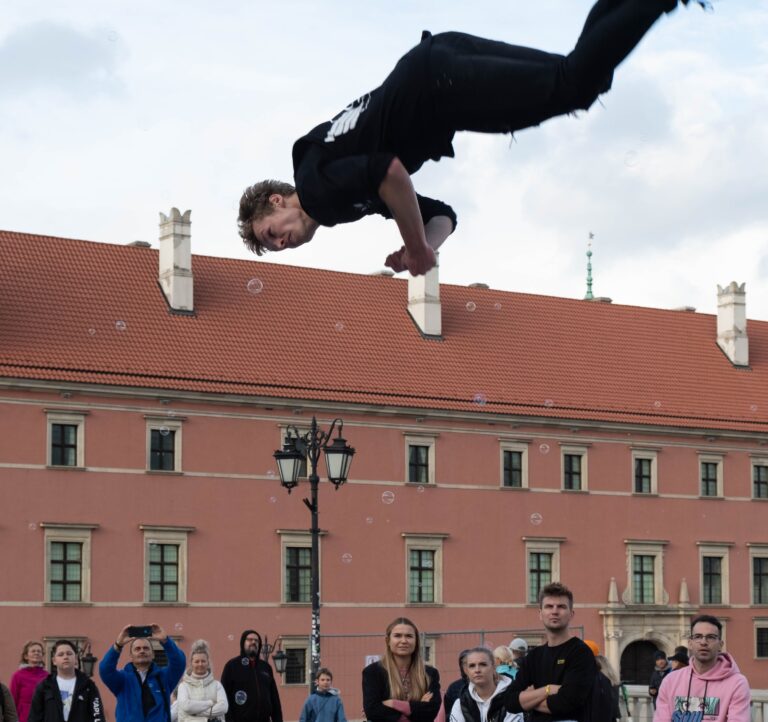
How did you work with rhythm without emotional manipulation?
Rhythm and pacing are about storytelling, not manipulation. Manipulation appears when you force emotions through artificial means. I aim to remain honest toward both my subjects and the audience.
Jak pracowałeś z rytmem filmu, unikając manipulacji?
Rytm służy narracji i utrzymaniu uwagi widza. Staram się nie stosować zabiegów, które wymuszają emocje — uczciwość jest dla mnie kluczowa.
How did your view of Unspoken change after its release?
I was surprised by how positive the reception was, especially given the challenges during production.
Jak zmieniło się Twoje spojrzenie na film po premierze?
Zaskoczył mnie bardzo pozytywny odbiór filmu, szczególnie biorąc pod uwagę trudności realizacyjne.
What surprised you most about audience reactions?
Many viewers described the film as emotional, which surprised me. I also didn’t expect its strong reception in South America.
Co najbardziej zaskoczyło Cię w reakcjach widzów?
Zaskoczyło mnie, że film był odbierany jako bardzo emocjonalny oraz jego popularność w Ameryce Południowej.
Is there anything you see differently now?
I realized I made a better film than I initially thought.
Czy dziś odczytujesz film inaczej?
Z perspektywy czasu widzę, że zrobiłem film lepszy, niż mi się wydawało.
What kinds of projects interest you now?
I remain interested in stories about fundamental human experiences — love, loneliness, inner struggle, hope, and joy. Recently, I’ve found myself drawn more toward lighter perspectives.
Jakiego rodzaju projekty najbardziej Cię teraz interesują?
Interesują mnie filmy o najważniejszych sprawach w życiu człowieka — z tym że coraz częściej spoglądam na jaśniejszą stronę ludzkiego doświadczenia.
Further links / Dalsze informacje
Documentary film page:
https://www.polishdocs.pl/en/director/642/maciej_adamek
Film Facebook page:
https://www.facebook.com/profile.php?id=61562708133608
Filmography page:
https://www.filmpolski.pl/fp/index.php?osoba=1152819